The Science of Milk Steaming
By Chiara Moretti | February 18, 2026 | 6 min read
Latte art gets all the attention, but the real magic of a milk drink happens at the molecular level. When you introduce steam into cold milk, you are not simply heating a liquid. You are orchestrating a series of biochemical transformations that turn a thin, translucent fluid into a dense, glossy microfoam capable of holding intricate patterns on the surface of an espresso shot. Understanding what happens inside that pitcher will make you a better steamer and a more consistent drink maker.
Milk is roughly 87 percent water, 4 percent fat, 3.5 percent protein, and 5 percent lactose. The proteins, specifically casein and whey, are the key players in foam formation. As steam is injected, air is incorporated into the milk, and whey proteins migrate to the surface of each air bubble, forming a thin elastic film that stabilizes the foam. This is why the first phase of steaming, called stretching, is critical. You want to introduce air while the milk is still cold, ideally below 40 degrees Celsius, because the proteins are more flexible and mobile at lower temperatures. Once the milk heats past this point, the proteins begin to denature and lose their ability to stabilize new bubbles.
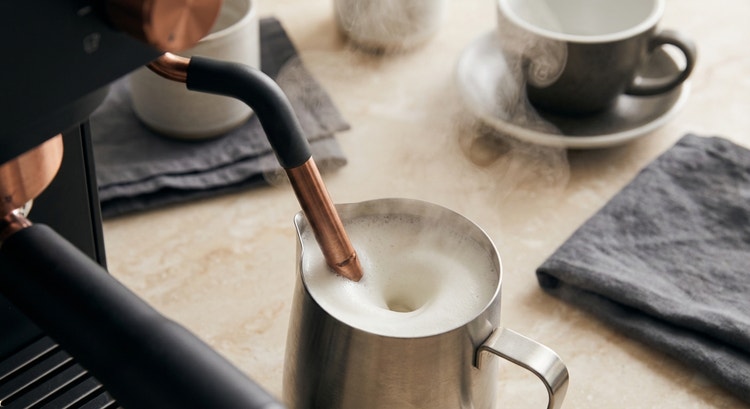
The second phase is texturing, or rolling, where you submerge the steam tip and create a vortex that breaks large bubbles into progressively smaller ones. The goal is microfoam: bubbles so tiny they are invisible to the naked eye, giving the milk a paint-like consistency and a glossy sheen. Temperature matters here too. Between 55 and 65 degrees Celsius, lactose reaches its peak perceived sweetness and the foam structure is at its most stable. Push past 70 degrees and you begin to scald the milk. The whey proteins aggregate irreversibly, the foam becomes coarse and stiff, and a sulfurous off-flavor develops. There is no recovering from overheated milk.
Fat content affects both flavor and foam quality. Whole milk produces a creamier, more forgiving foam that is ideal for beginners and latte art alike. Lower-fat milks foam more easily but produce a drier, less velvety texture. Plant-based alternatives vary widely. Oat milk, with its relatively high fat and beta-glucan content, steams the most similarly to dairy. Soy milk can curdle if the espresso is too acidic or the milk is too hot. Almond milk tends to produce thin, unstable foam. Whichever milk you choose, the principles remain the same: introduce air early, texture thoroughly, and respect the temperature ceiling.
Recommended Machines for Milk Drinks

Arco Doppio
Dedicated steam boiler means no waiting between pulling shots and steaming milk.

Arco Studio
Commercial-grade steam power in a home machine. Silky microfoam in seconds.