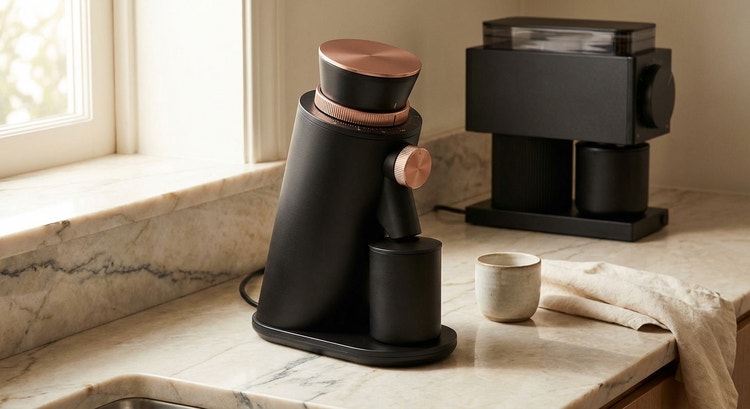
The flat white is deceptively simple. Here is how to make a genuinely good one.
It is not a small latte. It is not a strong cappuccino. It is its own thing, and getting it right at home is more achievable than you think.
The flat white has become the defining coffee drink of British cafe culture, yet most people who order one daily have never attempted one at home. The reason is usually a vague assumption that milk texturing is difficult. It is not. It requires attention, practice, and the right equipment.
Let us begin with what a flat white actually is, because the definition matters more than most people realise. A flat white is a double espresso — typically 36 to 40 millilitres — topped with steamed milk that has been textured to a microfoam consistency. The key word is microfoam: milk that has been aerated just enough to create a smooth, velvety texture with bubbles so small they are invisible to the naked eye. This is not the stiff, dry foam of a cappuccino. It is not the thin, barely aerated milk of a latte. It sits in a specific textural range that balances the intensity of espresso with the sweetness of properly heated milk.The drink originated in Australia and New Zealand — both countries claim it, neither is entirely wrong — and arrived in the UK in the early 2000s. By 2015 it had displaced the latte as the milk drink of choice in British specialty cafes, and by 2020 it had become the default order for an entire generation of coffee drinkers. Its appeal is its economy: less milk than a latte means the espresso remains the dominant flavour, while the microfoam adds body and sweetness without overwhelming the coffee.Here is how to make one at home with an Arco Doppio and Preciso.Step one: the espresso. Grind 18 grams of medium to medium-dark roast into the Doppio's portafilter. For a flat white, avoid very light roasts — their higher acidity can clash with milk in a way that produces a sour, thin drink. The sweet spot is a roast that tastes rich and slightly sweet as straight espresso, with notes of chocolate, caramel or stone fruit. Distribute the grounds evenly with your distribution tool or a gentle tap, tamp firmly and level, and lock the portafilter into the group head. Pull a double shot targeting 36 to 40 grams of liquid in 25 to 30 seconds. With the Doppio's PID holding temperature at 93 degrees Celsius, the shot should flow in a steady stream that starts dark and shifts to a warm amber.Step two: the milk. While the shot pulls — and this is the beauty of a dual-boiler machine — open the steam valve on a clean, dry cloth to purge any condensation. Pour cold whole milk into your jug to the bottom of the spout, roughly 150 to 180 millilitres. Submerge the steam tip just below the surface and open the valve fully. For the first two to three seconds, keep the tip near the surface to introduce air — you will hear a gentle hissing sound, almost like tearing paper. This is the stretching phase, and it is where the microfoam is created. Once the volume has increased by roughly a third, lower the tip deeper into the milk and angle the jug to create a whirlpool. This is the texturing phase — it breaks up any large bubbles and creates the uniform, glossy consistency you want.Stop steaming when the jug feels uncomfortably hot to touch on the side — roughly 65 degrees Celsius. Tap the jug firmly on the counter once to pop any surface bubbles, then swirl it until the milk looks like wet white paint. Glossy, smooth, with no visible foam sitting on top.Step three: the pour. Pour the milk into the espresso in a steady stream from about ten centimetres above the cup. When the cup is roughly two-thirds full, lower the jug and increase the flow. The microfoam will begin to appear on the surface. If you want to attempt a simple heart or tulip, rock the jug gently from side to side as you pour through the centre. If latte art is not your concern, simply pour steadily until the cup is full. The drink should be uniform in colour — a warm, tawny brown — with a thin layer of microfoam visible on the surface but no distinct foam cap.The result should taste like this: the espresso's sweetness and body carried forward by the milk, the milk's natural sugars adding a caramel quality, the microfoam providing a texture that makes the drink feel more substantial than its size suggests. A good flat white feels complete — nothing missing, nothing excess.Common mistakes and how to fix them. If the drink tastes thin and sour, your espresso is under-extracted — grind finer or increase the dose by half a gram. If it tastes bitter and ashy, grind coarser or reduce the dose. If the milk has large, visible bubbles, you introduced air for too long during the stretching phase — aim for two seconds of stretching, not five. If the milk is too hot and tastes scorched, stop steaming earlier — 65 degrees, not 75.Practice this three or four mornings in a row and you will find your rhythm. The Doppio's consistent temperature and the Preciso's repeatable grind mean that once you dial in a particular bag of beans, the espresso half of the equation stays constant. All your attention can go to the milk — and the milk, with practice, becomes instinctive.
Your Setup
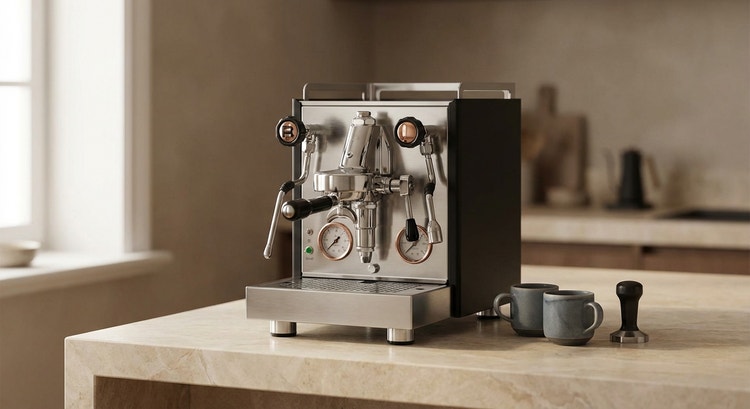
Arco Doppio