The Weiss Distribution Technique — WDT — uses thin needles to stir and break up clumps in your ground coffee before tamping. It is one of the most effective and inexpensive ways to improve espresso consistency. If you have ever wondered why your shots channel despite careful tamping, clumps in the coffee bed are almost certainly the reason.
The Science of Clumps and Channeling
Coffee grinders, especially those optimized for espresso-fine particles, produce clumps — small aggregates of ground coffee that stick together due to static electricity, oils on the bean surface, and moisture. These clumps can range from barely visible to several millimeters in diameter, and they wreak havoc on extraction. When you tamp a bed of coffee that contains clumps, the clumps compress into dense pockets while the surrounding loose grounds compress into less dense areas. The result is a puck with uneven density. When pressurized water encounters this puck, it follows the path of least resistance — flowing around the dense clumps rather than through them. These preferential flow paths are channels, and they produce the simultaneously sour-and-bitter flavor profile that is the hallmark of uneven extraction. The coffee in the channel is over-extracted (too much water passes through it) while the coffee in the dense clumps is under-extracted (water barely reaches it). The more clumps in the bed, the more channels in the shot, and the worse the result. The solution is deceptively simple: break the clumps apart before you tamp, and the density of the bed becomes uniform. WDT does exactly this.
How to Perform WDT
You need a WDT tool — a handle with several thin needles (ideally 0.3 to 0.4 millimeters in diameter) protruding from the bottom. Commercial WDT tools are available, but you can make an effective one by inserting acupuncture needles or 3D printer cleaning needles into a cork or a printed handle. Place a dosing funnel on your portafilter to prevent grounds from spilling. After grinding your dose into the basket, insert the needles into the coffee bed and stir in a circular or figure-eight pattern. Start at the top of the bed and work downward, then bring the needles back up. The goal is to move through the entire volume of coffee, breaking apart any clumps and distributing the grounds evenly across the basket. You will feel clumps as the needles catch and resist — keep stirring until the motion is smooth and uninterrupted. The entire process takes about 5 to 10 seconds. After WDT, the surface of the coffee will be rough and uneven — that is fine. Use a distribution tool or your finger to level the surface, then tamp as usual. The important thing is that beneath the surface, the grounds are now uniformly distributed without dense pockets. The tamp seals this even bed into a puck that will resist water uniformly.
Tools and Materials
The ideal WDT tool uses needles that are thin enough to move through fine espresso grounds without displacing large volumes of coffee. Needles between 0.3 and 0.4 millimeters strike the right balance — thin enough to break clumps without creating voids, thick enough not to bend. Thicker needles (over 0.5 millimeters) tend to push coffee around rather than breaking clumps, and can create new channels of their own. The number of needles matters too: 5 to 8 needles arranged in a ring pattern covers the basket efficiently in fewer rotations. A dosing funnel is essential for WDT — without it, the stirring motion will send coffee flying over the edge of the portafilter. Choose a funnel that fits snugly on your portafilter diameter (58 millimeters for Arco machines). Some dosing funnels are deep enough to add extra headroom for the stirring motion, which is helpful with higher doses. For DIY enthusiasts, a wine cork with six acupuncture needles pushed through it makes a surprisingly effective tool. Trim the needles to protrude about 10 to 12 millimeters — deep enough to reach the bottom of the basket without hitting the filter. The beauty of WDT is that the tool is inexpensive and the technique is simple, yet the impact on shot consistency is substantial and immediate.
When WDT Is Worth Doing — and When It Is Not
WDT is most beneficial when your grinder produces visible clumps or when you are single-dosing. Grinders with small burr sets, older burrs, or high static tend to clump more, and WDT compensates for this effectively. If you single-dose with the RDT technique and use a grinder with low retention and minimal clumping, you may find WDT provides only marginal improvement — but most baristas still include it for consistency. WDT also becomes more valuable as you refine other parts of your workflow. If your grind, dose, and tamp are already consistent and you are chasing the last 5 to 10 percent of extraction evenness, WDT is often the variable that gets you there. Competition baristas use WDT almost universally, not because their grinders are bad, but because the technique reduces the randomness that clumps introduce into every shot. The main argument against WDT is time — adding 10 seconds to your workflow when you are in a hurry might feel like a burden. But consider that one wasted channeled shot costs you 18 grams of coffee and a full brew cycle. If WDT prevents even one bad shot per week, it has already paid for the time many times over. For most home baristas pulling one to three shots a day, the return on 10 seconds of stirring is exceptional.
Key Takeaways
- Clumps in ground coffee create uneven density in the puck, leading to channeling and mixed sour-bitter flavors.
- WDT uses thin needles (0.3 to 0.4 mm) to break clumps and distribute grounds evenly before tamping.
- Always use a dosing funnel during WDT to prevent grounds from spilling over the portafilter edge.
- WDT is most impactful with clumpy grinders and single-dosing workflows, but benefits nearly every setup.
- The technique takes about 10 seconds and can prevent channeled shots that waste coffee and time.
Related Products
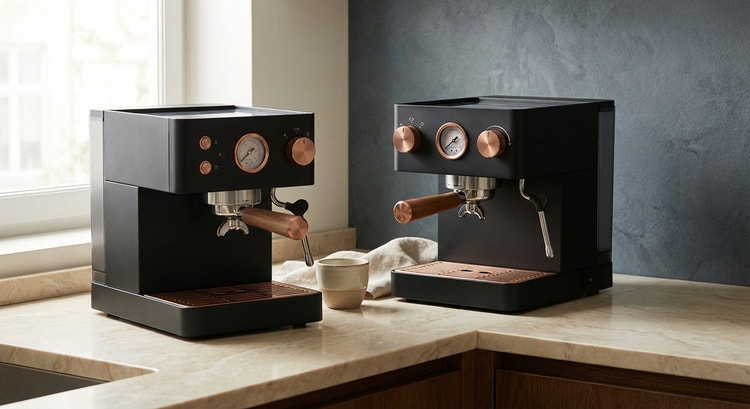
Arco Primo