Pre-Infusion in Practice: How Gentle Saturation Improves Every Shot
Pre-infusion is the practice of wetting the coffee puck with low-pressure water before applying full pump pressure. It is one of the simplest technique upgrades you can make, and it meaningfully improves extraction evenness, shot sweetness, and forgiveness for imperfect puck preparation. This guide explains the mechanics, shows you how to do it on various machine types, and helps you find the right duration for your setup.
What Pre-Infusion Does to the Puck
When you engage your espresso machine's pump, water hits the dry coffee bed at full pressure — typically 9 bars, or roughly 130 pounds per square inch. That sudden blast of force can damage the puck surface, compressing the top layer unevenly and creating micro-fractures where water will later channel. Pre-infusion avoids this violence. By introducing water at low pressure — usually between 1 and 4 bars, sometimes just line pressure from the water supply — you allow the coffee to absorb water gradually. The dry grounds swell as they hydrate, expanding to fill any small gaps or voids left by imperfect distribution or tamping. This swelling is called blooming, and it effectively self-levels the puck. Clumps that were slightly less dense absorb water and expand until they are the same density as their neighbors. Air trapped between particles escapes upward. The result, by the time full pressure engages, is a puck that is uniformly saturated and uniformly resistant to flow — exactly the condition needed for even extraction. Pre-infusion also changes the initial contact between water and coffee solubles. Instead of dissolving compounds under high shear force, the low-pressure phase allows gentler dissolution, which many baristas find produces a rounder, sweeter flavor profile with less harshness.
Which Machines Support Pre-Infusion
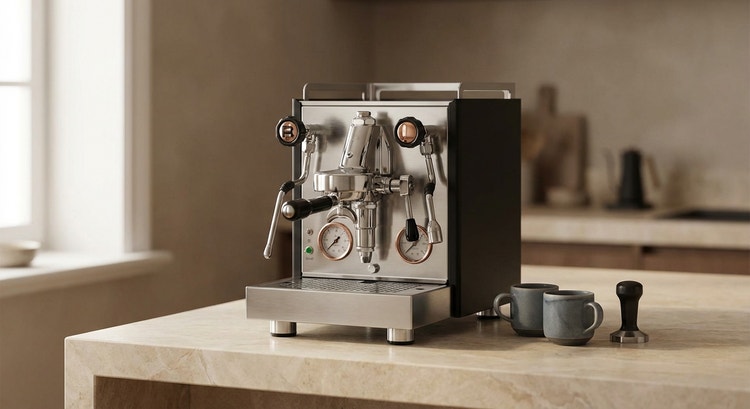
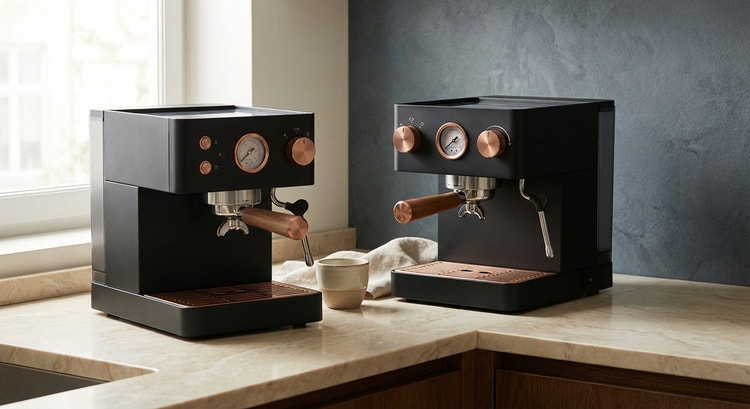
Pre-infusion is available across a wide range of machine designs, though the implementation varies. Lever machines have natural pre-infusion built into their workflow: when you lift the lever, a spring-loaded piston rises and water fills the brewing chamber at line pressure. The coffee saturates for as long as you hold the lever up before you release it to engage spring pressure. E61 group head machines can achieve passive pre-infusion because the E61 design includes a pre-infusion chamber. When you engage the pump, water first fills this chamber at gradually increasing pressure before full flow begins, providing a few seconds of low-pressure saturation automatically. Machines with programmable pressure profiles — including many modern dual-boiler machines like the Arco Doppio — let you set a specific pre-infusion duration and pressure. You might program 3 seconds at 2 bars followed by a ramp to 9 bars, giving you precise, repeatable control. Even machines without formal pre-infusion features can be manually coaxed. On the Arco Primo, you can engage the pump briefly — just until you see the first drops appear from the portafilter — then pause the pump for a few seconds to let the puck soak, and re-engage for the full shot. This manual technique is less precise but still effective. The key is that some form of gentle pre-wetting is possible on nearly any machine.
Adjusting Pre-Infusion Duration
The optimal pre-infusion duration depends on several factors: your coffee's roast level, the grind size, and the machine's pre-infusion pressure. A good starting point for most setups is 3 to 5 seconds of low-pressure water before full pump engagement. Light roasts benefit from longer pre-infusion — sometimes up to 8 or 10 seconds. These beans are denser and less porous than darker roasts, so they take longer to absorb water and swell. A generous pre-infusion gives them time to fully hydrate, which improves extraction evenness and helps bring out the sweetness that light roasts often hide behind acidity. Dark roasts, being more porous and soluble, saturate quickly. A shorter pre-infusion of 2 to 3 seconds is usually sufficient. Too long and you risk starting extraction during the pre-infusion phase itself, which can lead to over-extraction and muddiness. To find your ideal duration, start with 3 seconds and taste the result alongside a shot pulled with no pre-infusion using the same recipe. If the pre-infused shot is sweeter and more balanced, you are on the right track. Try extending to 5 seconds and taste again. Keep pushing until the shot starts to lose clarity or becomes muted, then back off by a second. That is your sweet spot for that particular coffee. When you change beans, reassess — every coffee has its own ideal pre-infusion window.
Pre-Infusion as a Forgiveness Factor
One of the most underappreciated benefits of pre-infusion is how much it compensates for imperfect puck preparation. No matter how carefully you distribute and tamp, there will always be minor variations in density across the coffee bed. Without pre-infusion, full pump pressure amplifies those variations — water accelerates through the less dense areas and avoids the denser ones, producing channels. Pre-infusion minimizes this effect by allowing the puck to self-correct during the low-pressure phase. The blooming action fills voids and equalizes density before the full force arrives. For home baristas who do not yet have perfectly consistent puck prep, this is transformative. Shots that would have channeled and tasted uneven become smoother and more forgiving. This does not mean you can skip distribution and tamping — pre-infusion helps, but it cannot fix a severely uneven puck. Think of it as a safety net that catches small errors, not a replacement for fundamentals. As you progress and your puck preparation becomes more consistent, you may find that pre-infusion shifts from a correction tool to a flavor tool — a way to fine-tune sweetness and body once all the basics are already locked in. Either way, it earns its place in your workflow.
Key Takeaways
- Pre-infusion wets the puck at low pressure before full brewing, allowing grounds to swell and self-level for more even extraction.
- Most machine types support some form of pre-infusion — built-in, programmable, or manual pump pulsing.
- Start with 3 to 5 seconds; extend for light roasts, shorten for dark roasts.
- Pre-infusion forgives minor puck preparation errors by equalizing density before full pressure hits.
- Taste shots with and without pre-infusion side by side to calibrate your preferred duration.
Related Products
Arco Primo