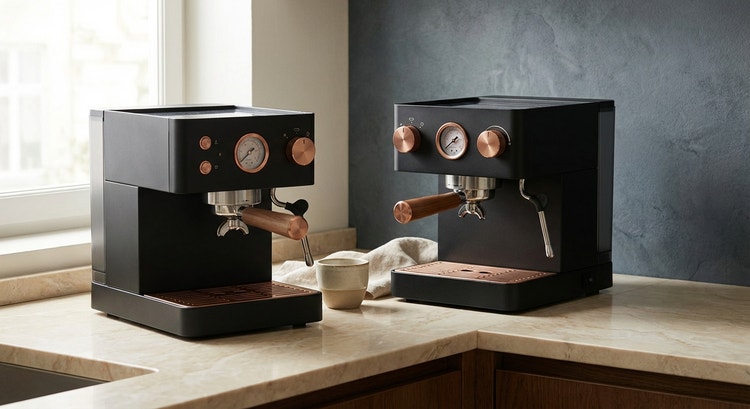
Your First Week with an Espresso Machine: What to Expect and Where to Start
You just unboxed your first real espresso machine. It is exciting — and a little intimidating. This guide sets realistic expectations for your first week, tells you exactly what to buy alongside your machine, and gives you a day-by-day plan for building confidence. Spoiler: your first shots will not be great, and that is perfectly normal.
Setting Realistic Expectations
Here is the honest truth: your first espresso shots will probably not taste like the ones at your favorite cafe. That is not because your machine is inadequate — it is because espresso is a skill, and skills take practice. A professional barista has dialed in thousands of shots across dozens of coffees and has built a mental library of cause-and-effect relationships that you simply have not had time to develop yet. The good news is that the learning curve is steep in the best possible way. Most people go from confused to competent within a week or two of daily practice, and from competent to genuinely good within a month. The bad news is that you will waste some coffee in the process. Budget for this: buy an extra bag or two of beans in your first week so you can practice without feeling guilty about pulling sink shots. Accept that dialing in is the process, not the obstacle. Every bad shot teaches you something, every adjustment narrows the field, and every good shot that follows validates your learning. Give yourself permission to experiment, waste a few grams, and treat the first week as training — not production.
What to Buy Alongside Your Machine
Your machine is only one part of the workflow. Before you pull your first shot, make sure you have these essentials. First: a capable burr grinder. The grinder is at least as important as the machine — some baristas argue more so. If your budget is split between machine and grinder, lean toward the grinder. A good entry-level espresso grinder with fine adjustment increments will serve you well. Second: a digital scale that reads to 0.1 grams and fits on your drip tray. Measuring dose and yield by weight is non-negotiable for consistent results. Third: fresh coffee beans. Buy from a local roaster or a specialty online source, and look for a roast date on the bag. Ideally, the beans should be between 7 and 21 days past roast. Avoid supermarket coffee unless it has a clear roast date — stale beans make learning much harder because they behave inconsistently and produce flat, crema-less shots. Fourth: a dosing funnel that sits on top of your portafilter and keeps grounds from spilling. Fifth: a knock box or container for spent pucks. Everything else — WDT tools, distribution tools, precision tampers — is useful but not essential in your first week. Start simple and add tools as you identify specific needs.
Day-by-Day Plan for Your First Week
Day one: unbox the machine, read the quick-start guide, run a few cycles of plain water through the group head to flush manufacturing residue, and practice locking and unlocking the portafilter. Get comfortable with the physical motions. Pull one or two shots just to see what happens — do not worry about taste yet. Day two: set a starting recipe. Weigh 18 grams of coffee into the basket, tamp level, and aim for 36 grams of liquid in the cup (a 1:2 ratio). Time the shot. Note whether it finishes faster or slower than 25 seconds, and adjust the grind accordingly. Pull three to five shots, adjusting grind each time. Day three: focus on taste. Pull a shot with your best settings from yesterday, let it cool slightly, and taste deliberately. Is it sour? Grind finer. Bitter? Grind coarser. Pull two or three more shots, adjusting one variable at a time. Day four and five: refine. By now you should be in the neighborhood of a drinkable shot. Repeat the dose-yield-time-taste loop, making smaller adjustments. Start adding milk if you drink lattes or cappuccinos — just heat milk with the steam wand and pour it in. Days six and seven: consolidate. Pull your morning shot using your best recipe. Note how it tastes. Make one adjustment if needed. You are now dialing in — the daily practice that every barista in the world does before their first customer.
Building a Dialing-In Habit
Dialing in is not a one-time event — it is a daily ritual. Even after your first week, your recipe will need small adjustments from day to day as the coffee ages, the weather changes, and your palate develops. Embrace this. Many home baristas find that the five minutes of dialing in each morning become one of the most satisfying parts of their routine: a quiet, focused, tactile ritual that produces a tangible reward. Keep your process simple and systematic. Every morning, pull one shot with yesterday's settings. Taste it. If it is good, you are done — enjoy your coffee. If it is off, make one adjustment (usually grind), pull another shot, and taste again. Two shots at most should get you dialed in for the day. Write down your settings — grind number, dose, yield, time, and a brief taste note — in a notebook or phone app. After a few weeks, you will have a record that reveals patterns: how grind changes over a bag's life, how different coffees behave, what ratio you personally prefer. This record accelerates your learning enormously because you are not starting from scratch each time. You are building on accumulated knowledge, and that is what separates a thoughtful home barista from someone who just pushes a button.
Key Takeaways
- Expect your first shots to be imperfect — budget extra beans for learning and treat the first week as training.
- Invest in a good burr grinder, a precision scale, fresh beans, and a dosing funnel alongside your machine.
- Follow a daily dose-yield-time-taste loop: pull, taste, adjust one variable, repeat.
- Dialing in is a daily practice, not a one-time setup — small adjustments each morning keep your shots consistent.
- Keep a simple log of grind setting, dose, yield, time, and taste notes to accelerate your learning curve.
Related Products