Water Temperature and Pressure: The Physics Behind Your Espresso
Temperature and pressure are the two physical forces that drive extraction. Temperature determines how aggressively water dissolves coffee solubles. Pressure determines how water moves through the tightly packed puck. Together, they define the speed and character of your espresso — and understanding them helps you control your cup with precision.
Why Temperature Matters
Water temperature directly affects extraction efficiency. Hotter water is a more aggressive solvent — it dissolves coffee compounds faster and more completely. Most espresso is brewed between 90 and 96 degrees Celsius, a range that balances extraction speed with flavor clarity. At the lower end of that range, around 90 to 92 degrees, extraction is gentler. Lighter, more delicate flavor notes — fruit acids, floral aromatics — tend to remain prominent because the heavier, more bitter compounds are not extracted as aggressively. This is often preferred for light-roasted single-origin coffees where you want acidity and complexity in the cup. At the higher end, around 94 to 96 degrees, extraction is more thorough. More of the caramel sugars and chocolate notes dissolve, which adds body and sweetness but also increases the risk of pulling out harsh, bitter compounds if you push too far. Darker roasts, which are more soluble to begin with, often taste better at lower temperatures because they extract easily and can become ashy or burnt-tasting with too much heat. A degree or two can make a noticeable difference in the cup, which is why machines with PID temperature controllers — like the Arco Doppio — are so valued. They hold the brew boiler to within one degree of your set point, giving you repeatability shot after shot.
The Role of 9 Bars of Pressure
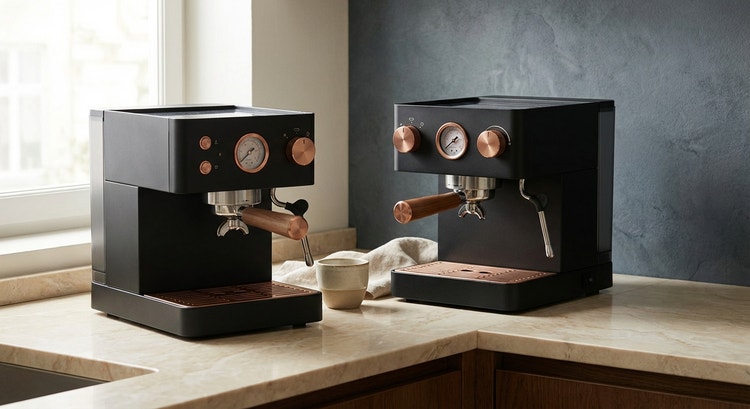
Espresso is defined by pressure. Unlike drip coffee, where gravity alone pulls water through the grounds, espresso uses a pump to force water through a tightly packed puck at high pressure. The standard target is 9 bars — about nine times atmospheric pressure — a number arrived at through decades of Italian engineering and experimentation. At 9 bars, water penetrates the compressed coffee bed evenly, saturating every particle and extracting solubles in the short brew window of 25 to 30 seconds. Lower pressure would require either a coarser grind or a longer brew time, fundamentally changing the character of the drink. Higher pressure can cause channeling — water forcing paths of least resistance through the puck, over-extracting in some spots and under-extracting in others. Most home espresso machines use a vibratory or rotary pump that generates up to 15 bars, with an over-pressure valve (OPV) set to release excess pressure and deliver 9 bars at the group head. If you look at the Arco Primo's specifications, for example, the pump generates 15 bars but the OPV limits brew pressure to 9 bars. This is standard engineering, and the result is consistent, repeatable extraction force from shot to shot.
Pre-Infusion: A Gentler Start
Pre-infusion is a technique where the puck is wetted with low-pressure water before full pump pressure is applied. This gentle soaking phase serves several important purposes. First, it allows the coffee bed to expand and settle evenly, filling any small gaps or inconsistencies left by imperfect distribution or tamping. This creates a more uniform puck, which means water will flow through it more evenly once full pressure kicks in. Second, pre-infusion reduces the initial shock on the puck surface. When 9 bars of pressure hit a dry puck instantly, the surface can crack or develop weak spots that lead to channeling. A few seconds of low-pressure soaking — typically 2 to 5 seconds at 2 to 4 bars — prepares the puck for the full force to come. Many modern machines, including the Arco Doppio, offer programmable pre-infusion duration. Even machines without a formal pre-infusion setting can benefit from a manual version: engage the pump briefly, pause, then engage fully. The result is often a more even extraction, a sweeter shot, and greater forgiveness for imperfect puck preparation.
Putting Temperature and Pressure Together
In practice, most beginners should start with their machine's default temperature setting — usually around 93 degrees Celsius — and focus on other variables like grind size and dose first. Temperature becomes a fine-tuning tool once you have the basics dialed in. If your shots taste consistently a little sour even with a fine enough grind and appropriate ratio, try raising the temperature by one degree. If they taste a little harsh or ashy, try lowering it by one degree. Pressure is less commonly adjusted on home machines, but understanding it helps you interpret what you see during a shot. If espresso gushes out in under 20 seconds despite a fine grind, consider whether your OPV might be set too high. If shots seem to choke despite a reasonable grind setting, check that your machine is building adequate pressure. A pressure gauge, if your machine has one, tells you in real time how the puck is responding. Over time, temperature and pressure become intuitive parts of your toolkit — not the first things you reach for, but powerful levers when the primary variables are already in range and you want to nudge a good shot toward a great one.
Key Takeaways
- Brew temperature between 90 and 96 degrees Celsius controls extraction aggressiveness — lower for light roasts, higher for body and sweetness.
- Nine bars of pressure is the espresso standard, forcing water evenly through a fine-ground puck in under 30 seconds.
- Pre-infusion wets the puck gently before full pressure, reducing channeling and improving evenness.
- Start with your machine's default temperature and adjust grind first; use temperature as a fine-tuning tool.
- PID temperature control provides shot-to-shot consistency within one degree Celsius.
Related Products
Arco Primo