Dose is how much coffee goes in. Yield is how much liquid comes out. The relationship between these two numbers — the brew ratio — is the most powerful recipe tool in espresso. Once you learn to measure and adjust dose and yield, you can reproduce great shots consistently and troubleshoot bad ones in seconds.
What Dose and Yield Actually Mean
The dose is the weight of dry ground coffee you put into your portafilter basket, measured in grams. For a standard double shot, most baristas work with a dose between 16 and 20 grams, depending on the basket size and the coffee. The yield is the weight of liquid espresso that ends up in your cup, also measured in grams. A typical double espresso yields somewhere between 30 and 50 grams of liquid, depending on the ratio you are targeting. Measuring by weight rather than volume is critical. Espresso contains crema — a layer of CO2 foam — that inflates the visual volume dramatically. A shot that looks like 60 milliliters in a glass might only weigh 36 grams. Volume is unreliable; weight is precise. That is why a small digital scale that reads to 0.1 grams is one of the most important tools in espresso. Place it under your cup, tare it to zero, start your shot, and stop the machine when you hit your target yield. Within a few days, this will feel as natural as eyeballing the water level in a kettle.
Understanding the Brew Ratio
The brew ratio is simply dose divided into yield — or more commonly expressed as dose-to-yield. If you dose 18 grams and yield 36 grams, you have a 1:2 ratio. If you yield 54 grams from the same dose, that is a 1:3 ratio. This single number tells you a tremendous amount about how your shot will taste. A tighter ratio like 1:1.5 produces a smaller, more concentrated shot — often called a ristretto. Because less water passes through the puck, fewer solubles are extracted, which tends to emphasize sweetness and body while reducing bitterness. A longer ratio like 1:2.5 or 1:3 sends more water through the coffee, extracting more solubles and producing a larger, lighter-bodied shot — sometimes called a lungo. The extra water brings out more of the heavier, later-extracting compounds, so the flavor profile shifts toward bitterness and dryness if pushed too far. Most specialty coffee baristas start with a 1:2 ratio and adjust from there. That middle ground gives you enough extraction for sweetness and complexity without tipping into harshness. Think of the ratio as your starting recipe; from there, you fine-tune with grind size and time.
How to Measure Accurately at Home
You need a scale that fits under your espresso cup on the drip tray. Many purpose-built espresso scales are compact enough to sit on any machine's drip tray and fast enough to keep up with real-time flow. Place your empty cup on the scale, press tare, and start brewing. Watch the weight climb and stop the pump when it hits your target yield. For the dose, weigh your ground coffee in the portafilter after grinding. If you are using a hopper grinder, grind into the portafilter and weigh it, subtracting the portafilter weight (or tare the portafilter on the scale first). If you are single-dosing, weigh your beans before grinding and then verify the weight in the portafilter to check retention. Consistency is more important than hitting a magic number. If you choose 18 grams in and 36 grams out, try to hit those numbers within half a gram every single time. When your input is consistent, your output becomes predictable — and that predictability is what lets you isolate variables and actually learn from each shot you pull.
Adjusting Ratio to Match Your Taste
Once you can reliably hit your target dose and yield, you can start experimenting. If your shot tastes sour and thin at a 1:2 ratio, try extending the yield to 1:2.2 or 1:2.5 — the extra water will increase extraction and bring more sweetness and body into the cup. If your shot tastes bitter and dry, pull it shorter — a 1:1.8 ratio reduces extraction and lets the brighter, sweeter notes come forward. Light-roasted single-origin coffees often benefit from longer ratios because they are denser and harder to extract, so you need more water contact to get the sweetness out. Darker roasts extract more easily and can taste harsh at longer ratios, so a tighter 1:1.5 to 1:2 often works better. Keep a simple notebook or phone note with the date, coffee name, dose, yield, time, and a one-word taste descriptor. Within a week of recording, patterns will emerge and you will develop genuine intuition for how ratio affects flavor in your specific setup.
Key Takeaways
- Dose is the weight of dry coffee in grams; yield is the weight of liquid espresso in the cup.
- The brew ratio (dose:yield) is the most powerful recipe variable — start with 1:2 and adjust from there.
- Always measure by weight, not volume, because crema inflates visual volume and makes it unreliable.
- Tighter ratios (1:1.5) emphasize body and sweetness; longer ratios (1:2.5+) increase extraction and can add bitterness.
- Consistency in dose and yield lets you isolate other variables like grind size and temperature.
Related Products
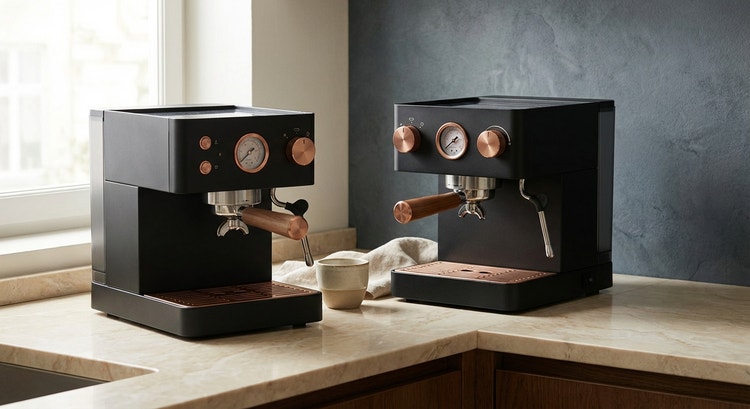
Arco Primo