Espresso has dominated specialty coffee culture for decades, but something is shifting. The world's best roasters are increasingly championing filter coffee as the purest way to taste what a bean has to offer. Here's why clarity in the cup is becoming the new benchmark — and why filter deserves a permanent place in your routine alongside espresso.
The Third Wave and the Rise of Transparency
The third wave of coffee — the movement that treats coffee as an artisanal product rather than a commodity — fundamentally changed what we value in a cup. First-wave coffee was about convenience: instant granules and percolators. Second-wave coffee, led by chains, introduced espresso drinks to the mainstream but buried the coffee under milk, sugar, and syrup. Third-wave coffee asks a different question: what does this specific coffee, from this specific farm, actually taste like? Filter brewing answers that question more directly than any other method. Because filter coffee uses a longer contact time, a higher water-to-coffee ratio, and no pressurised extraction, it produces a cup with remarkable transparency. You can taste the altitude a bean was grown at, the varietal characteristics of the plant, and the way the cherry was processed after picking. An Ethiopian Yirgacheffe brewed through a V60 can present jasmine, bergamot, and stone fruit with a clarity that espresso — for all its intensity — cannot replicate. This is not about filter being better than espresso. It is about filter being different, and that difference mattering more than ever now that we have access to extraordinary single-origin coffees from around the world.
Clarity vs Body: Understanding What Filter Does Differently
The fundamental distinction between filter coffee and espresso is not strength — it is structure. Espresso forces water through a compressed puck of fine coffee at roughly nine bars of pressure in about twenty-five seconds. This produces a concentrated, viscous liquid with a layer of crema composed of emulsified oils and CO2. The result is body-forward: thick, syrupy, intense. Filter coffee takes the opposite approach. Water passes through a coarser bed of coffee by gravity alone, over two to four minutes depending on the method. A paper filter removes most of the oils and fine sediment that give espresso its weight. What remains is a clean, lighter-bodied liquid where individual flavour compounds are easier to distinguish. Think of it like the difference between listening to music through a powerful speaker at high volume and listening through a pair of open-back headphones at moderate volume. Both are valid. The speaker gives you impact and physical sensation. The headphones give you separation and detail. Many specialty roasters now roast specific lots exclusively for filter because certain coffees — particularly high-altitude, lightly processed beans — reveal their best qualities only when brewed this way. If you have been drinking only espresso, filter coffee will feel like turning the lights up in a familiar room.
Why Specialty Roasters Are Pushing Filter
Walk into any respected specialty roastery today and you will notice something: the most expensive, most limited coffees on the shelf are almost always recommended for filter. There is a practical reason for this. Espresso extraction is aggressive. The high pressure and fine grind amplify everything — including any defect or imbalance in the roast. Roasting for espresso typically means developing the bean slightly longer to build sweetness, reduce acidity, and create the solubility needed for a balanced shot. Roasting for filter allows the roaster to keep the development shorter, preserving delicate aromatics and bright acidity that would become harsh or sour under espresso pressure. When a roaster acquires a small lot of competition-grade Gesha or a high-scoring Kenyan AA, they want you to experience every nuance the farmer worked to produce. Filter is the delivery mechanism that loses the least in translation. This does not mean filter coffee is only for rare or expensive beans. A well-roasted Brazilian natural brewed in a French Press produces a wonderfully sweet, nutty, chocolatey cup that costs very little per serve. The point is that filter opens up a wider window into the full spectrum of coffee flavour, from the everyday to the extraordinary. If you already own a good grinder, the barrier to entry is remarkably low: a V60 dripper costs less than a bag of beans.
How Filter Fits Alongside Espresso in Your Routine
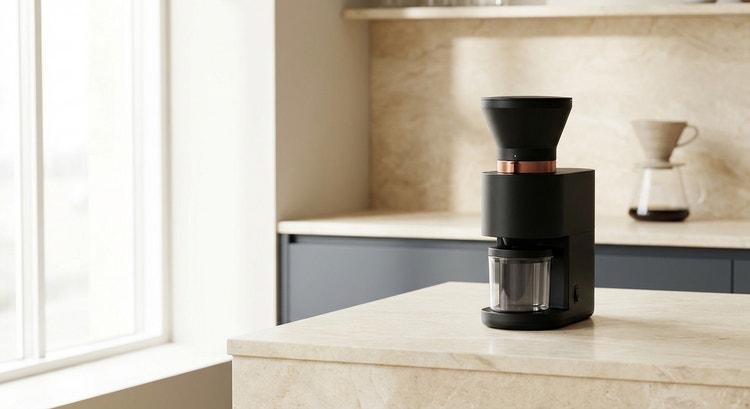
Filter coffee is not a replacement for espresso — it is a complement. Many experienced home baristas settle into a rhythm where espresso serves the morning ritual (a quick cortado or flat white before work) and filter serves the weekend exploration (a slow pour-over with a new single origin, savoured black). The workflows are different, and that difference is part of the appeal. Espresso demands precision: dose, yield, time, temperature, and pressure must align within narrow tolerances. It rewards repetition and consistency. Filter is more forgiving. A few grams off on your dose or a slightly uneven pour will shift the flavour gently rather than catastrophically. This makes filter ideal for experimenting with new beans, trying different brew ratios, or simply enjoying the meditative rhythm of a manual pour-over. If you own an Arco grinder with the Filtro burr set, switching between espresso and filter is straightforward — just change the grind setting and method. The same coffee ground coarse for a V60 will taste remarkably different from the same coffee ground fine for an espresso, and exploring that contrast is one of the genuine pleasures of the hobby. Filter coffee is having a moment because the coffee itself has never been better, and people are looking for ways to taste more of what is in their cup.
Key Takeaways
- Filter coffee produces a cleaner, more transparent cup that highlights individual flavour compounds better than espresso.
- Third-wave roasters often reserve their finest single-origin lots for filter brewing because shorter roast development preserves delicate aromatics.
- The difference between filter and espresso is not about quality — it is about structure: clarity versus body, detail versus intensity.
- Getting started with filter is inexpensive and pairs naturally with an existing espresso setup.
- Filter brewing is more forgiving than espresso, making it ideal for experimenting with new coffees.