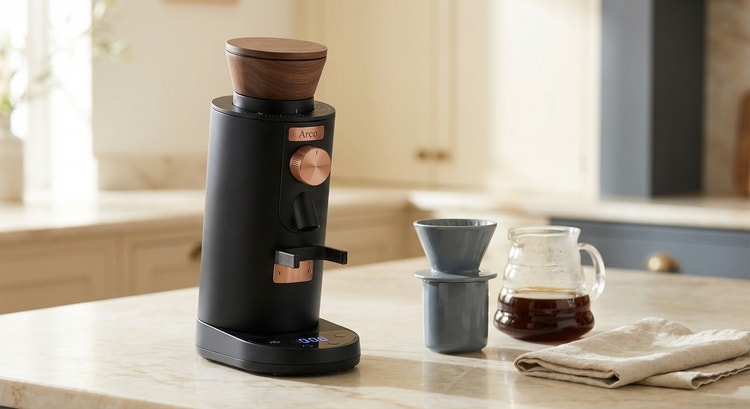
Brew ratio is the single most impactful variable in filter coffee after grind size. It determines whether your cup tastes watery and hollow or rich and overwhelming. Understanding how ratios work — and how to adjust them deliberately — gives you a reliable framework for dialling in any new coffee on any brew method.
What Brew Ratio Actually Means
Brew ratio is the relationship between the weight of ground coffee you use and the weight of water you brew with, expressed as coffee-to-water. When someone says they use a 1:16 ratio, they mean one gram of coffee for every sixteen grams of water. So a dose of fifteen grams of coffee would be brewed with two hundred and forty grams of water. The ratio controls concentration — how much dissolved coffee solids end up in each sip of your finished drink. A tighter ratio like 1:14 produces a more concentrated, intense cup. A wider ratio like 1:17 produces a lighter, more delicate cup. Neither is objectively correct. The right ratio depends on the coffee, the method, and your personal preference. Most specialty coffee professionals work within a range of 1:15 to 1:17 for filter brewing. The Specialty Coffee Association's so-called Golden Cup standard suggests a ratio that yields a total dissolved solids (TDS) concentration of 1.15 to 1.35 percent, which typically falls around 1:16 to 1:17 with a well-extracted brew. But these are guidelines, not laws. Some coffees taste best at 1:14. Some benefit from 1:18. The ratio is a starting point, and your palate is the final judge. Always weigh your coffee and water with a scale. Volume measurements are unreliable because different coffees have different densities — a tablespoon of a light-roast Ethiopian weighs noticeably more than the same tablespoon of a dark-roast Indonesian. A simple kitchen scale accurate to one gram is sufficient for filter brewing.
How Ratio Affects Clarity and Body
Changing your brew ratio does not just make coffee stronger or weaker — it shifts the entire balance of the cup in ways that interact with grind size, water temperature, and brew time. At a tighter ratio like 1:14 or 1:15, you have less water moving through more coffee. The cup will be more concentrated, with a heavier body and more pronounced sweetness. Flavour notes will feel bolder and more saturated. If the coffee has chocolatey or caramelly qualities, a tighter ratio will amplify them. This is where you want to be with coffees that are naturally smooth and sweet, or when you want a filter brew that approaches the intensity of a lungo without the pressure. At a wider ratio like 1:17 or 1:18, you have more water moving through less coffee. The cup becomes lighter-bodied with more perceived clarity. Delicate floral and fruit notes that might be masked at higher concentrations can emerge beautifully. High-altitude washed coffees from Ethiopia or Kenya — beans known for complexity and bright acidity — often perform best at wider ratios because the lighter concentration lets you perceive each individual note more clearly. There is a natural limit in both directions. Go tighter than 1:13 and the cup may taste heavy, cloying, or even astringent because the water cannot fully extract the coffee bed evenly with such a low volume. Go wider than 1:19 and the cup often tastes thin, watery, and under-developed because the dissolved solids are too diluted to register pleasurably on your palate. Within the 1:15 to 1:17 window, you have meaningful room to shape your cup without risking structural problems.
Starting Ratios for Common Methods
Each filter method has a slightly different sweet spot because the mechanics of extraction vary. For pour-over methods like V60 and Chemex, start at 1:16. This is the most widely used ratio in specialty pour-over and works well as a baseline for most coffees. Fifteen grams of coffee to two hundred and forty grams of water is a standard single cup. For two cups on a Chemex, scale up to thirty grams to four hundred and eighty grams. For AeroPress, the standard approach is 1:13 to 1:15 — tighter than pour-over because the immersion and pressure create a more efficient extraction. Fifteen grams of coffee to two hundred grams of water is a reliable starting recipe. If you dilute the resulting concentrate (as many AeroPress recipes suggest), the effective ratio at drinking strength returns to roughly 1:16 to 1:17. For French Press, start at 1:15. The full immersion and lack of a paper filter mean that extraction is thorough, and the unfiltered oils add body that makes the cup feel richer at any given concentration. Thirty grams of coffee to four hundred and fifty grams of water produces a robust batch for two. For cold brew concentrate, ratios tighten dramatically to around 1:8 because cold water extracts far fewer solubles. The concentrate is then diluted at serving time to taste, typically one part concentrate to one part water or milk. These are starting points. After your first brew with a new coffee, taste it critically and adjust. If the cup tastes hollow or watery, tighten the ratio by one unit — move from 1:16 to 1:15. If it tastes heavy, muted, or overpowering, widen it by one unit. One gram of coffee in either direction is often all it takes to shift the cup from good to excellent.
Adjusting Ratios for Different Coffees
Not all coffees respond the same way to a given ratio, and learning when to deviate from your default is what separates a competent brewer from a skilled one. Light-roasted, high-altitude coffees — typically single-origin offerings from East Africa or Central America — are dense and complex. They often benefit from wider ratios in the 1:16 to 1:17 range because the lighter concentration allows their layered acidity and floral aromatics to express themselves without congestion. Brewing a Kenyan AA at 1:14 can mute the vibrant blackcurrant and citrus notes that make the coffee special. Medium-roasted coffees with chocolate, caramel, or stone-fruit profiles tend to perform beautifully at the standard 1:15 to 1:16 range. These coffees have more developed sugars and less aggressive acidity, so a moderate concentration lets you enjoy their sweetness and body in balance. A Colombian Castillo at 1:16 on a V60 is one of the most reliably satisfying cups in specialty coffee. Darker-roasted coffees, which are more soluble and more porous than lighter roasts, can over-extract easily at standard ratios. If you are brewing a darker roast for filter — which is less common in specialty but entirely valid — try starting at 1:16 to 1:17 and use slightly cooler water (around ninety degrees Celsius instead of ninety-six). The wider ratio and lower temperature prevent the bitter compounds that develop during longer roasting from dominating the cup. Seasonal adjustment matters too. In summer, you might prefer a wider ratio that produces a lighter, more refreshing cup. In winter, a tighter ratio yields something richer and more warming. There is no single correct answer — only the answer that tastes right to you on a given day with a given coffee.
Key Takeaways
- Brew ratio (coffee-to-water by weight) is the primary lever for controlling concentration and cup character in filter coffee.
- The standard starting range is 1:15 to 1:17. Tighter ratios increase body and intensity; wider ratios increase clarity and delicacy.
- Always weigh your coffee and water — volume measurements are unreliable due to density differences between roasts.
- Light, complex coffees often prefer wider ratios (1:16–1:17); darker, sweeter coffees often prefer tighter ratios (1:14–1:16).
- Adjust by one ratio unit at a time and taste critically after each change.
Related Products
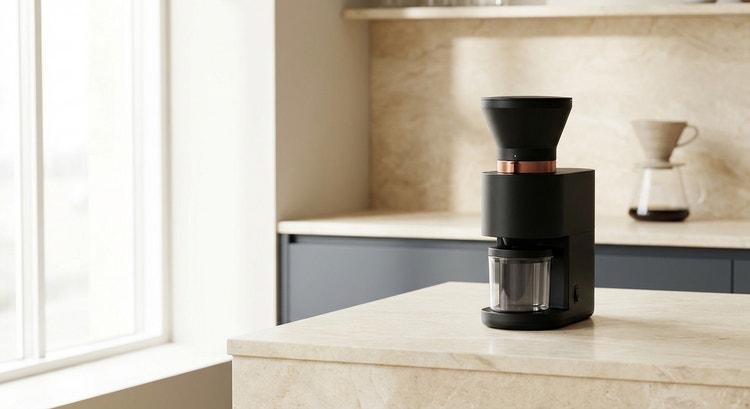
Arco Filtro