Flow Control Profiling: Shaping Espresso Through Flow Rate, Not Just Pressure
Pressure profiling adjusts the force pushing water through coffee. Flow control profiling takes a different approach: it adjusts the volume of water reaching the puck per second, and lets pressure become a dependent variable that responds to puck resistance. This distinction opens a creative dimension in espresso that rewards patience, attentiveness, and an intimate understanding of how water and coffee interact.
Flow vs. Pressure Control: The Key Distinction
In a standard pump-driven espresso machine, you set a target pressure — typically 9 bars — and the machine's pump works to maintain that pressure throughout the shot. The flow rate through the puck is determined by the puck's resistance: a denser puck lets less water through, a more porous puck lets more. The barista controls pressure; flow is a consequence. Flow control inverts this relationship. Instead of setting a target pressure, you control the rate at which water is delivered to the group head — measured in milliliters per second. Pressure becomes the dependent variable: if you deliver water slowly to a resistant puck, pressure stays low. If you open the flow wide, pressure climbs until the puck's resistance is overcome. This distinction matters because it changes what happens when the puck evolves during the shot. In a pressure-controlled system, as the puck erodes and resistance drops, the machine maintains the same pressure by increasing flow — potentially pushing more water through the weakening puck and over-extracting the later stages. In a flow-controlled system, you maintain the same flow rate, so as resistance drops, pressure naturally declines. The result is a gentler extraction curve that tapers off as the puck weakens, producing a cleaner, sweeter finish with less risk of late-shot harshness.
Manual Paddle and Valve Systems
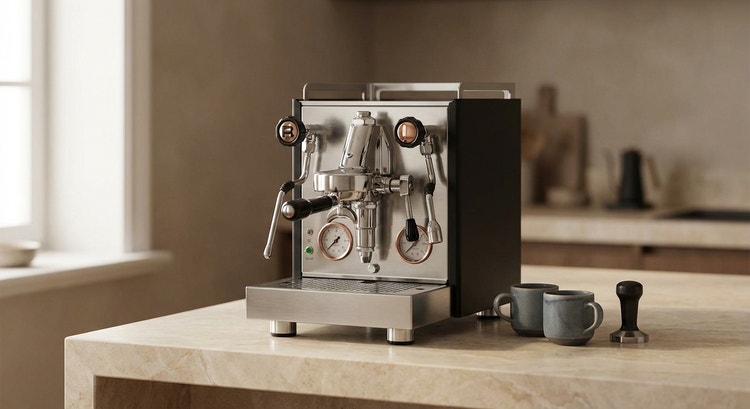
The most common way to achieve flow control on a home machine is through a manual flow control device — typically a paddle or needle valve installed on or after the group head. On E61-style machines, aftermarket flow control kits replace the standard mushroom valve with a needle valve that the barista can open and close in real time. Fully open delivers maximum pump flow; fully closed shuts off water entirely. Every position in between delivers a proportional flow rate. Lever machines offer a different form of flow control. On a spring lever, you control the initial fill by holding the lever up (low-pressure water fills the chamber), then release to engage the spring. On a direct lever like the La Pavoni or a Cremina, you control pressure directly through physical force on the lever — but because you are modulating the force in real time, you are effectively controlling flow as well. The Cremina-style curve, where the barista applies gradually increasing force and then eases off, is one of the most admired profiles in specialty coffee, producing shots with extraordinary sweetness and complexity. The manual nature of these tools is both their charm and their challenge. You are making real-time decisions based on what you see, hear, and feel. The drip pattern from the portafilter, the resistance of the lever, the sound of the pump — all feed back into your hands. It is the most tactile, engaged way to make espresso.
The Cremina-Style Curve and Other Profiles
The Cremina-style curve — named after the iconic Olympia Cremina lever machine — follows a distinctive shape: a gentle, low-pressure pre-infusion as water fills the chamber, a gradual ramp to peak pressure as the barista leans into the lever, and then a slow, natural decline as the spring or arm force relaxes. This curve produces a shot with pronounced sweetness, a silky mouthfeel, and a clean finish because the declining pressure reduces late-stage extraction of bitter compounds. Translating this curve to a paddle-equipped pump machine, you would start with the paddle partially closed for 5 to 8 seconds of low-flow pre-infusion, gradually open the paddle to full flow for 10 to 15 seconds of peak extraction, then progressively close the paddle over the final 10 seconds to taper the flow and reduce pressure as the puck weakens. The total shot time may be 30 to 40 seconds — longer than a standard flat-profile shot. Other flow profiles include the blooming profile, where you saturate the puck at very low flow for 20 to 30 seconds before a short burst of full-flow extraction. This produces a very even, gentle extraction that can bring out delicate florals in light-roasted coffees. The turbo shot profile uses a very coarse grind with high flow for a fast extraction that emphasizes clarity and transparency, almost like a concentrated filter coffee. Each profile is a tool for a different purpose, and learning when to apply which one is the advanced craft of flow control.
Matching Profile to Bean
The real art of flow control emerges when you start matching profiles to specific coffees. Dense, light-roasted single-origin coffees often benefit from extended pre-infusion and gentle, low-peak profiles because they are hard to extract and respond well to patient, thorough water contact. The blooming profile or the Cremina curve works beautifully here — the long, gentle approach coaxes sweetness and complexity out of beans that would taste sharp and acidic under a flat 9-bar extraction. Medium-roasted coffees with good solubility and balanced flavor profiles often shine with a standard declining profile. The full-pressure middle phase extracts efficiently, and the declining tail preserves sweetness without washing out into bitterness. Dark-roasted blends, which extract very easily, may actually benefit from faster, higher-flow profiles with less pre-infusion. These beans give up their solubles readily, and a shorter extraction at moderate pressure keeps the shot from becoming ashy or over-extracted. The key is experimentation and note-taking. Pull the same coffee with two or three different profiles, tasting each carefully. Record what you taste alongside the profile shape and the resulting TDS if you have a refractometer. Over time, you will develop an intuition for which profile shape to reach for when you open a new bag, and that intuition is the culmination of everything you have learned about extraction, pressure, and the relationship between water and coffee.
Key Takeaways
- Flow control sets the water volume per second and lets pressure respond to puck resistance, while pressure control does the inverse.
- Manual paddles and lever machines give real-time, tactile flow control for shaping the extraction curve.
- The Cremina-style declining curve — ramp up, peak, taper off — produces sweetness and clean finishes.
- Blooming profiles suit light roasts; declining profiles suit medium roasts; faster profiles suit dark roasts.
- Match the flow profile to the bean's solubility and density, and taste the differences side by side.
Related Products