Two cups. One conversation. No rush.
The art of making coffee the reason people sit down and stay.
There is a version of hospitality that has nothing to do with dinner parties or elaborate entertaining. It is simpler than that. Someone comes to your door — a friend, a neighbour, a relative who was passing through — and you say, 'Let me make you a coffee.' That sentence is never really about the coffee. It is about the next thirty minutes. It is an invitation to sit down, to talk, to be present. The coffee is the mechanism. The conversation is the point.
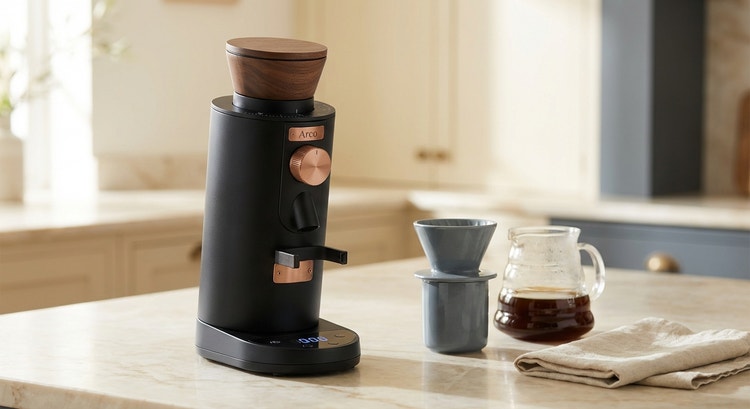
Your grandmother understood this instinctively. She had a stove-top pot that she used three times a day, and when anyone arrived at her house — announced or otherwise — she put it on the flame before she said hello. The coffee was strong, slightly over-extracted, served in cups so small they looked like they belonged in a doll's house. Nobody cared about the extraction quality. The coffee was the signal that you were welcome, that there was time, that whatever you came to say could be said at her table.You have inherited the instinct but updated the equipment. The Arco Primo sits on your counter, and it has become, without any conscious intention, the social engine of your household. When someone visits, you walk to the machine. The gesture is automatic. It says everything that needs to be said: come in, sit down, you matter enough to me that I will make you something with my hands.The process itself is part of the ritual. You grind the beans — the Macinino is quiet enough that conversation continues over its hum. You tamp. You extract. Twenty-five seconds of silence filled by the sound of espresso falling into a cup. Your guest watches, or does not watch, and either way the brief pause creates a natural transition. Whatever they were doing before they arrived — rushing, worrying, checking their phone — stops. The coffee ceremony, modest as it is, interrupts the momentum of the day and replaces it with something slower.You have noticed that people talk differently when they are holding a cup. The hands are occupied, which means the phone stays in the pocket. The warmth of the cup is grounding — a small physical pleasure that makes the body relax even when the mind is anxious. The espresso itself is a shared sensory experience, a common reference point. 'This is good,' your friend says, and that simple observation opens the door to everything else. How are you? How is the new job? I have been meaning to tell you something.The conversations that happen over coffee in your kitchen are not the same as the ones that happen at a restaurant or a bar. There is no waiter interrupting. There is no background music. There is no bill to split, no decision about whether to order another drink, no social performance for the surrounding tables. It is just two people, two cups, and whatever needs to be said.Some of the most important conversations of your life have happened this way. Your sister told you she was pregnant over an espresso at your kitchen table. Your best friend, going through a divorce, sat in the same chair for two hours on a Wednesday afternoon while you made three rounds and said very little. The coffee was not the conversation. But the coffee made the conversation possible, by creating a space where it felt safe to be honest.You do not make complicated drinks. You do not offer a menu. It is espresso, or espresso with a splash of warm milk for those who prefer it. The simplicity is deliberate. You are not trying to impress your guests with latte art or single-origin exotica. You are trying to welcome them. The Primo makes this easy — one button, consistent extraction, no fuss. The coffee is good, reliably good, and that reliability is itself a form of hospitality. Your guest knows that the cup you hand them will taste right, every time, because you have made it for them before and it has always been right.The Macinino grinder complements this approach. It does not demand attention. It grinds consistently, sits quietly on the counter, and asks nothing of you beyond occasional cleaning. It is the kind of equipment that disappears into the routine, which is exactly what you want. The ritual should feel effortless, even when there is craft behind it.You have thought about this more than you might admit. The size of the cup matters — small enough to finish in ten minutes, which means the guest can leave after one without awkwardness, or stay for another without commitment. The temperature matters — hot enough to warm the hands, not so hot that the first sip burns and breaks the rhythm of conversation. The strength matters — enough caffeine to sharpen attention, not so much that it creates jitteriness.These are small calibrations, and most of your guests will never notice them. But you notice. You notice because hospitality, real hospitality, lives in the details that the guest never sees. The pre-warmed cup. The freshly ground beans. The wiped counter. The quiet attention paid to how someone takes their coffee, remembered from last time, applied without asking.Your grandmother would recognise what you are doing, even if the machine on the counter looks nothing like her stove-top pot. The technology is different. The gesture is the same.Someone is at the door. You are already reaching for the grinder.
Your Coffee and Conversation setup
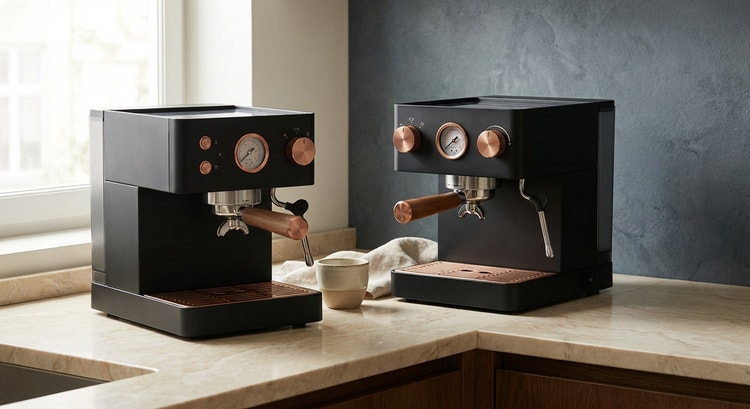
Arco Primo