Light roasts. High extraction. The Nordic way of coffee.
In Scandinavia, coffee is brewed lighter, cleaner, and more intentionally than anywhere else in the world.
Scandinavian coffee culture is the inverse of Italian espresso tradition — where Italy goes dark, Nordic countries go light. Where Italy favours intensity and brevity, Scandinavia favours clarity and volume. The Nordic approach to coffee has quietly revolutionised specialty coffee worldwide, and at its heart is a commitment to filter brewing that treats the bean, not the machine, as the protagonist.
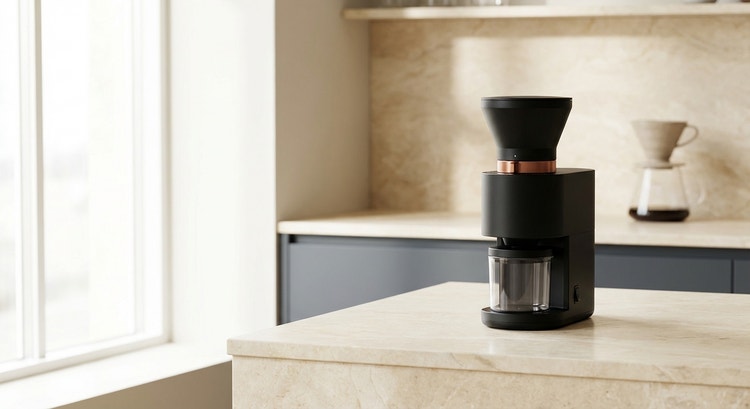
You have to understand the numbers to understand why Scandinavian coffee culture matters. Finland consumes more coffee per capita than any other country on earth — roughly twelve kilograms per person per year, nearly three times the Italian average. Sweden, Norway, and Denmark are not far behind. These are nations that drink enormous quantities of coffee, and they have developed, over generations, a sophisticated understanding of how to make it well.The Nordic approach begins with the roast. While Italian tradition demands dark, oily beans roasted to the edge of carbonisation, the Scandinavian tradition favours light to medium roasts that preserve the bean's origin characteristics. A washed Ethiopian roasted in Helsinki will taste recognisably of bergamot, blueberry, and jasmine — the flavours of the terroir, not the roaster's signature. This light-roast philosophy, once considered eccentric by the rest of the coffee world, has become the foundation of the global specialty coffee movement.Filter brewing is the natural partner for these roasts. Espresso's concentrated pressure can overwhelm delicate origin flavours, while filter's gentle extraction lets them unfold gradually across a larger volume of water. The Scandinavian ideal is a cup that is clean, bright, and complex — something you can drink a full mug of without fatigue, something that reveals new notes as it cools, something that makes you think about where the bean was grown rather than how it was roasted.The Arco Filtro was developed with this tradition in mind. Its water temperature control, set to ninety-three to ninety-six degrees, matches the European Coffee Brewing Centre standards that were established in Norway in the 1960s and remain the global benchmark for filter brewing. The bloom phase — a thirty-second pause during which a small amount of water saturates the grounds, allowing carbon dioxide to escape — mimics the technique of a skilled Nordic barista doing a manual pour-over. The calibrated flow rate ensures an extraction yield between nineteen and twenty-two percent, which is the window where sweetness, acidity, and body are in balance.The concept of fika — the Swedish coffee break — is perhaps the most civilised idea any culture has contributed to the working day. Fika is not merely drinking coffee. It is stopping. Sitting down. Sharing a cup with colleagues or friends. It happens twice a day in most Swedish workplaces, once in the morning and once in the afternoon, and it is considered so important that skipping it is viewed as mildly antisocial.The coffee at fika is always filter. A large pot, brewed fresh, poured into ceramic cups, accompanied by something sweet — a cinnamon bun, a piece of cardamom cake, a simple biscuit. The coffee is the medium through which the social interaction happens, and its quality matters because people are paying attention to it. Bad coffee at fika would be like bad wine at an Italian dinner — technically tolerable but culturally embarrassing.The home brewing culture in Scandinavia reflects this seriousness. Where other countries might keep an espresso machine as a status symbol and a filter machine as an afterthought, Nordic homes often reverse the hierarchy. The filter brewer occupies the prime counter position, and the beans are chosen with a care that reflects decades of cultural attention to what good filter coffee should taste like.Light roasts demand precision that darker roasts forgive. A degree of temperature variation in the brew water can shift a light-roasted Ethiopian from sweet and floral to sour and astringent. A slightly too-coarse grind produces a thin, under-extracted cup that wastes the bean's potential. The Filtro's engineering addresses these demands with the kind of quiet competence that Nordic design philosophy prizes — nothing flashy, nothing excessive, just consistent delivery of the correct parameters.The cultural connection between Scandinavia and filter coffee runs deeper than preference. It is rooted in climate and geography. Long, dark winters create a need for warmth and for social rituals that sustain communities through months of cold. Coffee — large, warm, and communal — answers this need more effectively than espresso, which is individual, brief, and intense. The large cup, cradled in both hands, is a Nordic archetype with functional origins.The new generation of Nordic roasters — Tim Wendelboe in Oslo, Koppi in Helsingborg, The Barn in Berlin via Copenhagen — has pushed light-roast filter brewing to an art form. Their beans, roasted to highlight rather than transform, brewed with precision on equipment that controls every variable, produce cups that challenge the assumption that coffee is a simple, bitter, caffeine-delivery mechanism. In the hands of a Nordic roaster and a calibrated brewer, coffee becomes something closer to wine — terroir-expressive, vintage-specific, and endlessly varied.The Filtro brings this tradition into any kitchen, in any country. You do not need to be Scandinavian to appreciate what light-roast filter brewing can achieve. You just need a good brewer, good beans, and the willingness to taste coffee as the Nordic world has been tasting it for decades — with attention, with patience, and with the quiet confidence that a large cup of clean, bright, beautifully extracted filter coffee is one of the finest things a kitchen can produce.Brew it. Pour it. Sit down. Take your time. That is fika, and it is available to you right now.
Your Nordic Light Roast setup
Arco Filtro