Measured. Calibrated. Repeatable. Coffee as an engineering discipline.
In Germany, the engineering mindset meets the brewing process — and the results are extraordinary.
Germany is a country that builds cars to tolerances measured in microns, that engineers bridges to last centuries, and that approaches every technical challenge with a rigour that the rest of the world admires and occasionally finds intimidating. It was inevitable that this mindset would find its way into coffee. The German precision coffee movement treats brewing as an engineering problem and solves it with data, measurement, and systematic optimisation.
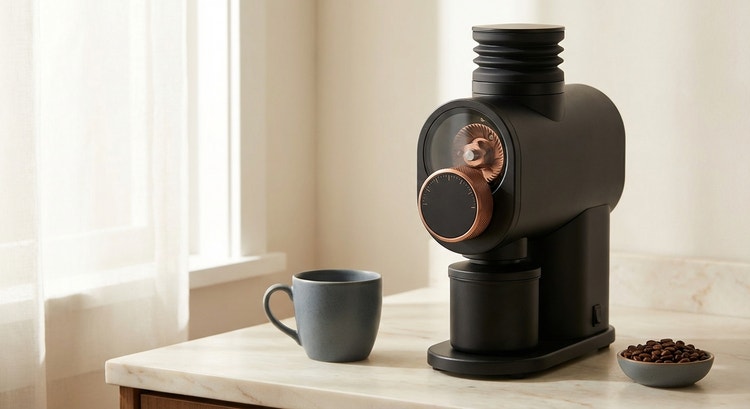
The German approach to coffee begins with a question that sounds simple and turns out to be bottomless: what, exactly, is happening during extraction? Not what it looks like or what it tastes like, but what is physically, chemically, molecularly occurring when hot water passes through ground coffee at pressure?In other coffee cultures, this question is answered with intuition, experience, and taste. In Germany, it is answered with numbers. Total dissolved solids, measured with a refractometer. Extraction yield, calculated from dose, yield, and TDS. Temperature stability, logged across the entire shot duration. Pressure curves, recorded and compared. The German home barista does not guess whether a shot was good. They measure it, record it, and use the data to make the next one better.This is not obsession. It is method. The distinction matters, because obsession is circular — it repeats the same anxious loops without progress. Method is linear — it moves forward, step by step, toward a defined outcome. The German precision coffee community has defined that outcome clearly: maximum extraction of desirable flavour compounds with minimum extraction of undesirable ones, repeatable across multiple shots, multiple beans, and multiple days.The Arco Studio Pro is the machine that speaks this language. Its PID temperature controller holds brew water within half a degree Celsius of the set point, logged and displayable on the digital readout. The flow control paddle allows manual manipulation of pressure throughout the shot, enabling the kind of pressure profiling that produces measurably different extraction curves depending on the bean, the roast, and the desired flavour profile. The integrated shot timer counts to the tenth of a second. Every variable is visible, adjustable, and recordable.The Arco Zero grinder complements the Studio Pro's precision with its own. Zero retention means the dose-in equals the dose-out, eliminating a variable that less precise grinders introduce. The stepless adjustment moves in increments so fine that the difference between two adjacent settings may not be visible to the eye but is measurable in the cup. The sixty-four millimetre flat burrs produce a particle distribution that the German community has mapped, graphed, and debated in forums that read like engineering conferences.The workflow of a German precision brewer is a study in controlled variables. Bean: identified by origin, varietal, processing method, roast date, and roast level. Dose: weighed to a tenth of a gram on a calibrated scale. Grind: set to a specific point on the stepless dial, recorded in a notebook or an app. Water: filtered to a defined mineral content, temperature set to a specific degree. Extraction: timed from the first drop, with pressure adjustments at defined intervals. Yield: weighed in real time on a scale beneath the cup. The entire process is documented, and the documentation is the foundation for the next shot.This sounds clinical. It is anything but. The precision is in service of flavour, and the German precision community produces some of the most extraordinary espresso in the home-brewing world. When every variable is controlled, the bean speaks clearly. A Kenyan AA, brewed at ninety-three point five degrees with a six-second pre-infusion at three bars followed by a declining pressure curve from eight bars to six, produces a shot with blackcurrant acidity, brown sugar sweetness, and a finish that extends for forty seconds. Change the pre-infusion to four seconds and the blackcurrant shifts toward raspberry. Change the temperature by half a degree and the sweetness recedes, replaced by a cleaner, more citric acidity. These are not imagined differences. They are measurable, repeatable, and — for those who taste them — revelatory.The German coffee community, both online and in person, is remarkably generous with its knowledge. Forums like Kaffee-Netz host threads running to hundreds of pages where experienced brewers share their data, their methods, and their results. The culture of Stammtisch — regular, informal gatherings — has been adapted into coffee meetups where enthusiasts bring their grinders, their beans, and their refractometers to someone's kitchen and spend an afternoon pulling shots and comparing data. It is social, collegial, and deeply technical.The commercial specialty scene in Germany reinforces this ethos. Berlin's coffee culture — anchored by roasters like Five Elephant, The Barn, and Bonanza — treats precision as a baseline requirement, not a differentiator. Hamburg's Elbgold, Munich's Man Versus Machine, Cologne's Van Dyck — each has developed a reputation for technical excellence that reflects the broader German conviction that if something is worth doing, it is worth doing with exactitude.The home brewing equipment market in Germany is correspondingly sophisticated. German consumers evaluate machines by their engineering specifications — boiler material, PID algorithm, pump type, group head thermal mass — with the same analytical framework they would apply to a power tool or an automobile. The Arco Studio Pro succeeds in this market because its specifications withstand scrutiny. The materials are premium. The engineering is sound. The performance is measurable and consistent.But the numbers, in the end, serve the cup. The most data-rich extraction log in the world means nothing if the coffee does not taste extraordinary. And this is where the German precision approach delivers its most compelling argument: when you control every variable, when you measure every parameter, when you eliminate every source of randomness, the coffee that emerges is the truest possible expression of the bean. Not better than what the bean can offer. Exactly what the bean can offer. Nothing more, nothing less.That is the German ideal: not perfection as an abstraction, but perfection as an engineering outcome. Measured. Calibrated. Repeatable. And, in the cup, undeniably excellent.
Your German Precision setup
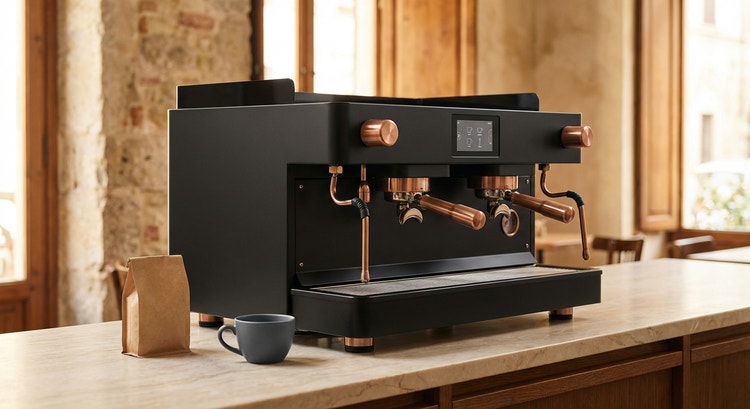
Arco Studio Pro