Luca Bianchi, Head of Training · 15 min read
Tokyo may be the most interesting coffee city in the world. It holds two entirely separate coffee traditions in parallel — the kissaten, a mid-twentieth-century Japanese coffee house built around dark roasts, manual brewing, and meditative silence, and the third-wave specialty scene that arrived in the 2010s with light roasts, latte art, and a vocabulary borrowed from wine. We spent two weeks drinking our way through both worlds, trying to understand how they coexist and what each can teach the other.
What Is a Kissaten?
A kissaten is a Japanese-style coffee house, distinct from the broader category of cafe or coffee shop. The word combines kissa (drinking tea) and ten (shop), but despite the etymology, kissaten are coffee establishments first. They emerged in Japan in the early twentieth century and reached their peak in the 1970s and 1980s, when Tokyo alone had tens of thousands. The number has declined sharply since — many owners are aging, rents have risen, and younger customers gravitate toward chains or specialty shops — but several hundred remain, and the best of them are extraordinary. The typical kissaten is small, dim, and wood-paneled. Seating is at a counter or at tables separated by frosted glass partitions. Smoking was traditionally permitted and many still allow it, though a growing number have gone smoke-free. The menu is limited: coffee, tea, toast, sandwiches, and often a house-made pudding or cake. There is no music in some kissaten — the silence is deliberate, part of the experience. Others play jazz or classical records on vintage audio equipment, and in these jazu kissa the sound system is as much a point of pride as the coffee. The brewing method is almost always hand-drip — either nel drip, which uses a flannel filter held by a wire frame, or paper drip using a Kalita or Hario dripper. Siphon brewing is common as well, and in some kissaten it is the only method offered. The coffee is roasted dark, ground fresh for each cup, and brewed slowly with water just off the boil. The result is a cup that is heavy-bodied, intensely aromatic, slightly bitter, and meant to be sipped over thirty minutes or more.
The Masters of Nel Drip
Nel drip — brewing through a cloth filter — is the defining technique of the kissaten tradition, and watching a master do it is one of the great pleasures of coffee travel. The flannel filter produces a cup that is different from paper or metal filtration. It allows oils to pass through while trapping fine sediment, resulting in a body that is fuller than paper drip but cleaner than French press. The cloth also absorbs some of the coffee's more volatile aromatic compounds during the first few uses, which means a well-seasoned nel filter imparts a subtle character of its own — something that paper filter advocates would call contamination but kissaten masters call depth. At Chatei Hatou in Shibuya, the nel drip is performed with a concentration and precision that borders on ceremony. The owner, who has been brewing this way for over forty years, measures water temperature with a thermometer, pours in a tight spiral from a swan-neck kettle, and times the bloom and drawdown phases to the second. The coffee is a house-roasted blend — dark but not burnt, with notes of dark chocolate, roasted barley, and a clean finish that defies the depth of the roast. He brews one cup at a time and serves it with a small sweet, a glass of water, and no conversation unless you initiate it. Cafe de L'Ambre in Ginza, which has operated since 1948, takes the concept further by aging green coffee beans for years — sometimes decades — before roasting and brewing them. The owner's theory is that aging reduces acidity and develops complexity, much like aging wine. Whether or not you accept the theory, the cups are remarkable — smooth, round, and deep, with an almost syrupy texture. A cup of their aged coffee is not cheap, but it is an experience that has no equivalent anywhere else in the world.
Tokyo's Third Wave: Global Standards, Local Precision
Tokyo's third-wave specialty scene arrived relatively late compared to cities like Melbourne, London, or Portland, but it arrived with the particular Japanese talent for absorbing a foreign craft and executing it with extreme precision. The early adopters — shops like Onibus Coffee, Fuglen Tokyo, and Blue Bottle's Kiyosumi outpost — brought the familiar third-wave template: light roasts, single origins, latte art, and an aesthetic that draws on Scandinavian minimalism. What makes Tokyo's specialty scene distinctive is the level of technical rigor applied to every element. At Onibus Coffee in Okusawa, the baristas weigh every dose to a tenth of a gram, monitor extraction with refractometers, and adjust grind size multiple times per day based on humidity and ambient temperature. The attention to detail is not performative — it is systematic, embedded in the workflow, and invisible to the customer unless they ask. Fuglen Tokyo, a Norwegian-Japanese collaboration in Tomigaya, occupies a mid-century modern space that doubles as a cocktail bar in the evening. Their espresso is pulled on a Synesso MVP Hydra, and the filter menu rotates through roasters from across Scandinavia and Japan. The flat white is one of the best in the city — velvety, sweet, and balanced in a way that would satisfy both a Melbourne purist and a Tokyo salaryman on his morning commute. Koffee Mameya in Omotesando takes the opposite approach to curation. Instead of roasting their own, they source from dozens of roasters worldwide and present the menu as a tasting library. The customer describes what they like — fruity, chocolatey, clean, heavy — and the barista selects a bean and brewing method to match. It is specialty coffee as guided experience, and it works because the staff's palate knowledge is encyclopedic.
Where the Two Worlds Meet
The most interesting shops in Tokyo are the ones that exist in the space between kissaten tradition and third-wave innovation. These places are rare, because the two cultures have different aesthetics, different values, and different customer bases. But when someone manages to bridge the gap, the result is unlike anything you find elsewhere. Bear Pond Espresso in Shimokitazawa is perhaps the most famous example. The owner, Katsuyuki Tanaka, pulled espresso with such intensity and precision that videos of his technique went viral online. His approach is rooted in craft obsession — the kissaten value of dedicating a lifetime to a single technique — but applied to espresso rather than nel drip. The shop is tiny, the hours are unpredictable, and the demeanor is serious, but the espresso is extraordinary: dense, sweet, and texturally closer to melted chocolate than to anything most people associate with the word coffee. Switch Coffee in Meguro straddles the line differently. The space looks like a modern specialty shop — clean, bright, minimal — but the owner trained in a kissaten before transitioning to specialty, and it shows in the pace of service and the emphasis on single-cup brewing. Their pour-over is technically third-wave in every respect — light roast, precision-dosed, carefully timed — but the rhythm and attention feel inherited from the nel drip tradition. Glitch Coffee in Jinbocho explicitly references both traditions. Their espresso menu features competition-level single origins, but they also offer a siphon preparation and a nel drip that would satisfy any kissaten loyalist. The owner sees no contradiction: both traditions care deeply about the cup, and the best coffee is made by people who treat brewing as a discipline rather than a routine.
Practical Notes for Drinking Coffee in Tokyo
Tokyo's coffee culture rewards patience and observation. Many of the best kissaten have no English menu and no English-speaking staff. Point at what someone else is drinking, or simply say koohii and trust the barista. In specialty shops, English is more common but not universal — the language of coffee extraction translates well enough. Opening hours are often unusual. Kissaten tend to open early — seven or eight in the morning — and close by late afternoon. Some close on Sundays, some on Mondays, and some keep entirely idiosyncratic schedules. Check before you go, and if the door is closed, come back another time without taking it personally. Prices are higher than you might expect. A single cup of nel drip at a good kissaten will cost between six hundred and a thousand yen. Specialty espresso is similarly priced. Aged or rare coffees at places like Cafe de L'Ambre can cost several thousand yen per cup. None of this is overpriced when you consider the skill, time, and sourcing involved, but it is worth knowing before you sit down. Tipping is not practiced in Japan and will cause confusion if you try. Smoking remains common in older kissaten. If you are sensitive to smoke, ask before sitting down — many kissaten now have non-smoking sections or have gone entirely smoke-free, but it varies. Finally, silence is valued. Many kissaten are intentionally quiet spaces. Keep your voice low, put your phone on silent, and let the coffee set the pace. It is not unfriendliness — it is an invitation to slow down, which is the entire point.
Key Takeaways
- Tokyo holds two parallel coffee cultures: the kissaten tradition of dark roasts and manual brewing, and the modern third-wave specialty scene.
- Nel drip — brewing through a flannel filter — is the defining kissaten technique, producing a cup unlike any other filtration method.
- Tokyo's specialty scene applies extraordinary Japanese precision to global third-wave standards, resulting in some of the most technically rigorous coffee in the world.
- The most interesting Tokyo shops are those bridging both traditions, combining kissaten craft values with specialty sourcing and extraction.
Related Products
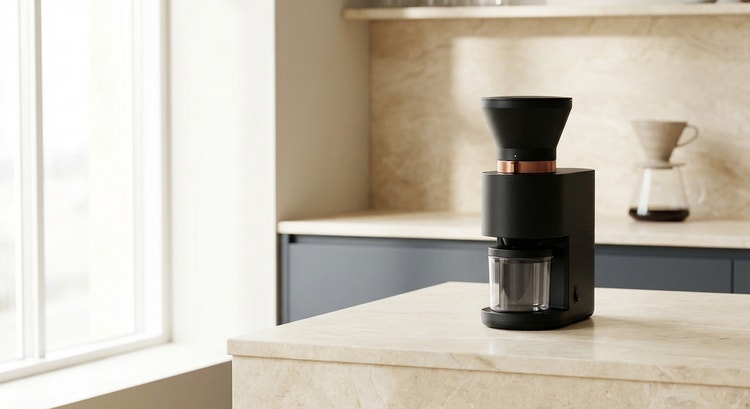
Arco Filtro
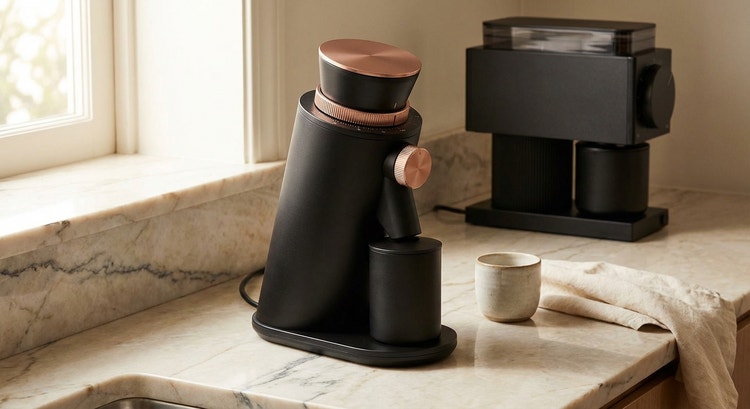
Arco Preciso
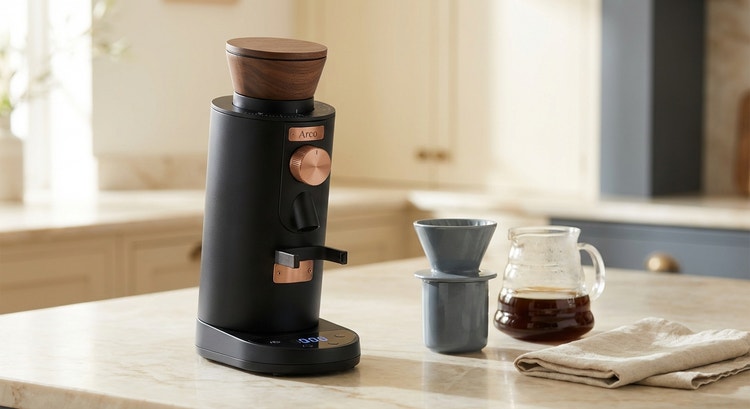
Arco Macinino