The Scandinavian Light Roast Revolution: Nordic Coffee Culture and What It Means for Espresso
Luca Bianchi, Head of Training · 10 min read
Scandinavia did not just adopt specialty coffee — it redefined what coffee could taste like. The Nordic approach to roasting, brewing, and drinking has influenced every serious coffee market on the planet. For espresso lovers trained on Italian dark roasts, visiting Copenhagen, Oslo, or Stockholm is a revelation: coffee that tastes of jasmine, bergamot, and tropical fruit, pulled as espresso from beans so light they barely look roasted.
Why Scandinavia Went Light
The Nordic light roast movement did not emerge from nowhere. Scandinavia has been one of the world's highest per-capita coffee-consuming regions for centuries — Finland, Norway, Sweden, and Denmark consistently rank in the global top ten. But the traditional Scandinavian coffee was filter, not espresso, and it was brewed strong in large batches for communal drinking. The shift towards light roasting began in the early 2000s, driven by a handful of roasters in Oslo and Copenhagen who had access to exceptional green coffee and the conviction that conventional roasting was destroying most of what made those beans interesting. The logic was simple: a coffee cherry is a fruit, and the flavours encoded in the seed — by altitude, soil, variety, and processing — are delicate. The darker you roast, the more those origin flavours are replaced by roast flavours: caramel, chocolate, carbon. To taste the coffee itself, rather than the roasting process, you need to apply less heat for less time and accept a cup that tastes fundamentally different from what most of the world considers coffee. The Scandinavian roasters pursued this idea further than anyone else. Where Italian roasting aims for the second crack — the point at which the bean's cellular structure breaks down and oils migrate to the surface — Nordic roasting often stops before or just at the first crack. The resulting bean is dense, hard, pale in colour, and contains flavour compounds that darker roasting would have destroyed. When brewed correctly, these light roasts produce coffee that can taste of blueberry, passion fruit, rose, lemon curd, or black tea — flavours that seem impossible until you taste them.
Light Roasts and Espresso: The Challenge
The Nordic light roast was developed primarily for filter brewing — pour-over, batch brew, and AeroPress — where longer contact time and lower temperature extract flavour gently from a less-developed bean. Pulling these roasts as espresso is a different challenge entirely. Espresso extraction is violent: nine bars of pressure, ninety-three-degree water, twenty-five seconds of contact time. The process extracts everything in the bean quickly and intensely. With a dark roast, this produces the thick, syrupy, bittersweet shot that Italy perfected. With a light roast, the same parameters produce something thin, sour, and unpleasant — the acids that give light-roast filter coffee its brightness become harsh and one-dimensional under standard espresso conditions. Solving this problem required rethinking espresso parameters from the ground up. Nordic baristas and roasters discovered that light-roast espresso needs higher extraction yields — longer ratios (1:2.5 or even 1:3 instead of the Italian 1:2), finer grinds, higher temperatures (95 to 96 degrees Celsius), and longer shot times (30 to 40 seconds). Some pioneered pressure profiling — starting with low pressure to gently saturate the puck, then ramping up, then tapering off at the end — to extract sweetness and body without over-extracting the aggressive acids. The result, when done well, is a style of espresso that exists in its own category: bright, juicy, complex, with a clarity of flavour that dark-roast espresso cannot achieve. It is not better or worse than traditional espresso — it is a different drink that happens to come from the same machine.
A Week in Nordic Coffee Cities
Spending a week visiting cafes in Copenhagen, Oslo, and Stockholm in sequence reveals how the Nordic coffee philosophy expresses itself differently in each city. Copenhagen is the most experimentally minded. The city's leading cafes serve espresso menus that change weekly, with baristas who can discuss processing methods and cultivar genetics with the fluency of sommeliers discussing grape varieties. The aesthetic is minimal — white walls, pale wood, natural light — and the coffee is presented with a seriousness that borders on reverence. A single-origin espresso here is served in a small ceramic cup, often with a card listing the farm, altitude, variety, process, and roaster. You are expected to taste it black before adding anything. Oslo has a slightly more relaxed atmosphere but an equally rigorous approach to quality. The city's roasters are among the most awarded in the world, and the cafe scene benefits from a population that has grown up drinking good coffee as a baseline. What strikes you in Oslo is the integration of specialty coffee into everyday life — this is not a subculture, it is simply how coffee is. A petrol station in Norway serves better filter coffee than most cafes in southern Europe. Stockholm brings a Swedish design sensibility to the experience — the cafes are beautiful spaces where the architecture and the coffee receive equal attention. The city's specialty scene is younger than Copenhagen's or Oslo's but is growing rapidly, with a new generation of Swedish roasters who are developing their own voice rather than imitating the Norwegian and Danish pioneers.
Bringing the Nordic Approach Home
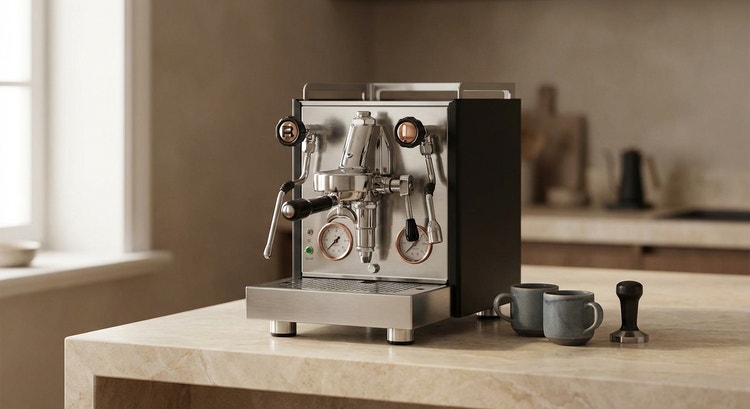
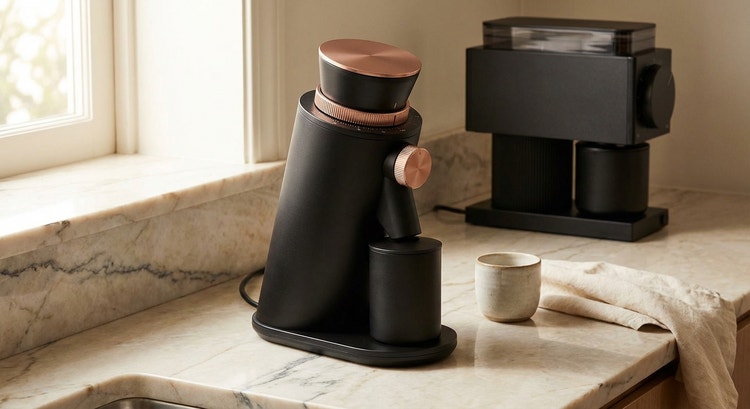
The Nordic light roast revolution has practical implications for anyone building a home espresso setup. If you want to explore this style of coffee, you need equipment that gives you control over the variables that matter. Temperature control is essential. Light roasts need higher brew temperatures — 95 to 96 degrees Celsius — to extract sweetness and balance the high acidity. The Arco Studio Pro's PID control lets you set temperature to the degree, and its E61 group head maintains that temperature shot after shot. The Doppio's dual PID is equally capable and more accessible for most home setups. Grind quality matters even more with light roasts than with dark. Light-roasted beans are harder and denser, requiring more force to grind and producing more fines if the grinder is not up to the task. The Arco Preciso's large flat burrs handle light roasts cleanly, producing the uniform particle distribution that prevents channeling — the enemy of light-roast espresso, where any uneven extraction shows up immediately as sourness. Pressure profiling, available on the Studio Pro, is the final piece. The ability to start with a gentle pre-infusion at two to three bars, ramp to full pressure, and then taper off at the end of the shot transforms light-roast espresso from a frustrating exercise into a consistently rewarding one. If you have never tried a well-extracted light-roast espresso, order a bag from a Nordic roaster — Tim Wendelboe in Oslo, Coffee Collective in Copenhagen, or Drop Coffee in Stockholm are excellent starting points — and prepare to rethink what espresso can taste like.
Key Takeaways
- Nordic roasters pioneered light roasting to preserve the origin flavours that darker roasting destroys — fruit, floral, and tea-like notes that redefine espresso.
- Light-roast espresso requires different parameters: higher temperature, longer ratios, finer grinds, and often pressure profiling.
- Copenhagen, Oslo, and Stockholm each express Nordic coffee culture differently — experimental, integrated, and design-focused respectively.
- The Arco Studio Pro's PID temperature control and pressure profiling make it ideal for exploring Nordic-style light-roast espresso at home.