Priya Sharma, Customer Care Lead · 7 min read
Scale buildup is the silent enemy of every espresso machine. Hard water deposits gradually coat boilers, thermoblocks, and internal tubing, choking flow rates and degrading temperature stability. Descaling takes less than thirty minutes, costs almost nothing, and can add years to your machine's life. Here is exactly how to do it.
Why Scale Forms and Why It Matters
Every time you brew espresso, minerals dissolved in your water — primarily calcium and magnesium carbonates — are left behind as the water evaporates or passes through the system. These minerals accumulate on hot surfaces, forming a hard, chalky layer called limescale. The hotter the surface, the faster scale forms, which is why boilers and thermoblocks are the primary victims. Scale is more than a cosmetic issue. As it thickens, it insulates heating elements, forcing them to work harder and longer to reach target temperatures. This increases energy consumption and slows heat-up time. In thermoblocks, scale narrows the water channel, reducing flow rate and creating uneven heating — you end up with temperature instability that produces inconsistent shots. In boilers, scale can flake off in chunks that clog solenoid valves and gicleurs, leading to expensive repairs. The rate of scale buildup depends on your water hardness. If your tap water is above 100 parts per million of total dissolved solids, you should descale every four to eight weeks. Every Arco machine ships with a water hardness test strip so you can measure your supply and set an appropriate schedule. Soft water areas can extend the interval to three months; very hard water areas may need monthly attention.
What You Need Before You Start
Gather your materials before you begin so the process flows without interruption. You need a descaling solution — Arco recommends food-grade citric acid powder, which is gentle on seals and effective on calcium deposits. Mix 25 grams of citric acid into one liter of warm water until fully dissolved. Alternatively, use Arco's pre-measured descaling sachets, which are the same formulation in convenient single-dose packets. You also need a large container or bowl to catch the solution as it flows through the machine, a clean microfiber cloth, and access to a sink. Remove the water tank from your machine and empty it completely. If your machine has a built-in water filter, remove it — you do not want the filter absorbing the descaling solution. Fill the tank with your prepared citric acid solution. Ensure the drip tray is empty and in place. Power on the machine but do not let it reach full brewing temperature — you want it warm, not hot, because citric acid is most effective between forty and sixty degrees Celsius. If your Arco machine has a dedicated descaling mode — the Studio and Studio Pro both do — activate it now. The machine will guide you through the process with indicator lights. For the Primo, Nano, and Doppio, follow the manual steps in the next section.
The Descaling Process
With the citric acid solution loaded in the tank and the machine warmed, begin running the solution through the brew group. On the Arco Primo and Doppio, activate the brew switch without a portafilter in place and let the solution flow into your container. Run approximately 250 milliliters through, then stop and let the machine sit for five minutes. This dwell time allows the acid to dissolve scale deposits inside the thermoblock or boiler. Repeat this run-and-pause cycle until the entire liter of solution has passed through the system — typically three to four cycles. Next, run solution through the steam wand. Open the steam valve and let solution flow until the tank is nearly empty. The steam circuit is often neglected during descaling, but it accumulates scale just as aggressively because steam temperatures are higher than brew temperatures. Once all the solution has been flushed through both circuits, empty the tank and rinse it thoroughly with fresh water. Fill it with clean water and run the entire tank through the brew group and steam wand to rinse away residual citric acid. Repeat the rinse with a second full tank of fresh water. Your machine is now descaled. Replace the water filter if applicable, refill the tank, and let the machine heat fully before pulling a test shot.
Setting a Maintenance Schedule
The most important part of descaling is doing it before you notice symptoms. By the time your machine takes noticeably longer to heat up or your flow rate drops during a shot, the scale buildup is already significant and may have caused minor damage to seals or valves. Prevention is far easier than remediation. Use the water hardness test strip that came with your machine to determine your water's hardness level. If it reads below 75 parts per million, descale every three months. Between 75 and 150, descale every six to eight weeks. Above 150, descale monthly — or better yet, consider using filtered or bottled water with a mineral content in the ideal range of 70 to 120 parts per million. Set a recurring reminder on your phone or calendar. Arco machines with app connectivity — the Studio and Studio Pro — will notify you automatically based on shot count and your water hardness setting. Beyond descaling, wipe the drip tray and shower screen weekly, backflush with clean water after each session, and replace the group gasket annually. These small habits compound into a machine that performs like new for years. The machines we see in our service center that are in the worst condition are almost never manufacturing defects — they are simply machines whose owners skipped routine maintenance until something broke.
Key Takeaways
- Scale buildup degrades temperature stability, slows heat-up, and can cause expensive component failures if left unchecked.
- Use food-grade citric acid (25 grams per liter) and run it through both the brew group and steam circuit with dwell pauses.
- Rinse with two full tanks of clean water after descaling to remove all citric acid residue.
- Set a descaling schedule based on your water hardness — monthly for hard water, quarterly for soft water.
Related Products

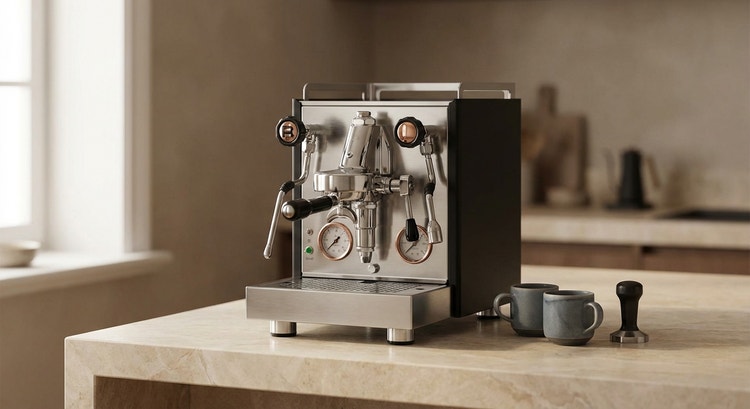
Arco Primo
Arco Doppio
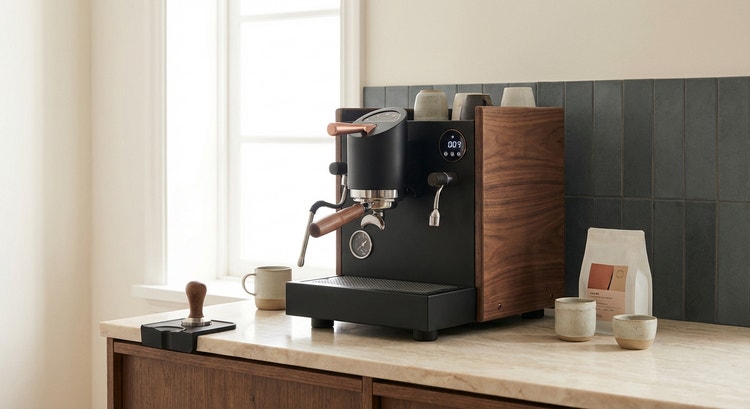
Arco Studio

Arco Studio Pro