Marcus Webb, Barista Trainer · 8 min read
Ana Pereira is a straight-espresso purist who favors light-roast single origins. David Okonkwo prefers large, milky flat whites made with a chocolatey medium blend. They share a one-bedroom apartment in Lisbon, a single Arco Studio, and a relationship that has survived the grinder-setting debate. This is how they make it work.
The Taste Gap
Ana grew up in Porto, where espresso is served short, strong, and without apology. She drank her first bica at fifteen and has never added milk or sugar. When she discovered specialty coffee in her twenties, she gravitated toward light-roasted single origins — washed Ethiopians, Kenyan AA lots, experimental Colombian fermentations — because they offered complexity and acidity that dark roasts flatten. She drinks two espressos a day: one first thing in the morning, one after lunch. Both are straight, both are savored slowly. David grew up in Lagos, Nigeria, where instant coffee with condensed milk was the morning standard. He discovered espresso after moving to London for university and fell in love with flat whites — the Australian-style kind, with micro-foam textured like wet paint, in a ceramic cup slightly larger than a cappuccino. He prefers medium-roast blends that emphasize chocolate and nut flavors, because these stand up to milk without disappearing. He drinks three flat whites a day and considers them essential to productive thought. When Ana and David moved in together, the taste gap became a logistics problem. Two different beans, two different grind settings, two different brew recipes, two different drink formats — all through one machine and one grinder.
The Grinder Negotiation
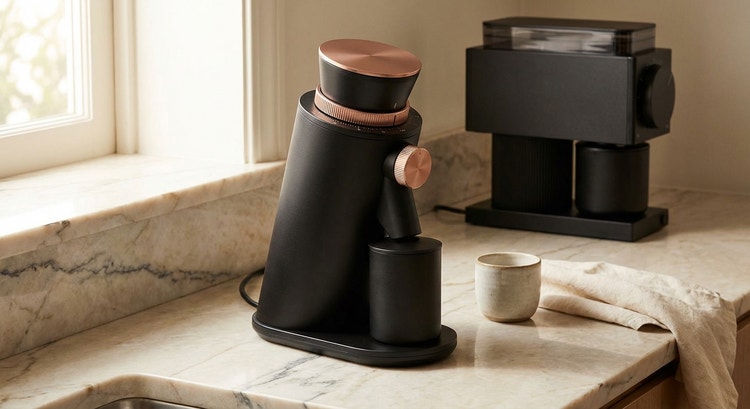
The first month was chaotic. Ana would dial in her light roast in the morning, pulling a delicate 18-in, 40-out shot at a fine grind. David would come to the machine twenty minutes later, forget to change the grind setting, and pull a choked, bitter shot on her setting. He would adjust coarser for his medium blend, pull a flat white, and leave the grinder at his setting. Ana would arrive after lunch, pull a gushing, sour shot on his coarse setting, and text David a photo of the watery result with no caption. The passive-aggressive espresso photo exchange lasted about two weeks before they sat down and designed a system. The solution was a grinder protocol. They use the Arco Preciso, which has a stepless adjustment collar with an index ring. Ana's setting is marked with a small dot of nail polish at the one o'clock position. David's setting is marked with a different color at the four o'clock position. Whoever finishes a session returns the grinder to neutral — the middle of the two marks — as a visual signal that the next person needs to adjust. They purge two grams of beans after every adjustment to clear the retained grounds from the previous setting. It sounds fussy on paper, but in practice it takes ten seconds and has eliminated every grind-related conflict.
The Machine That Serves Both Styles
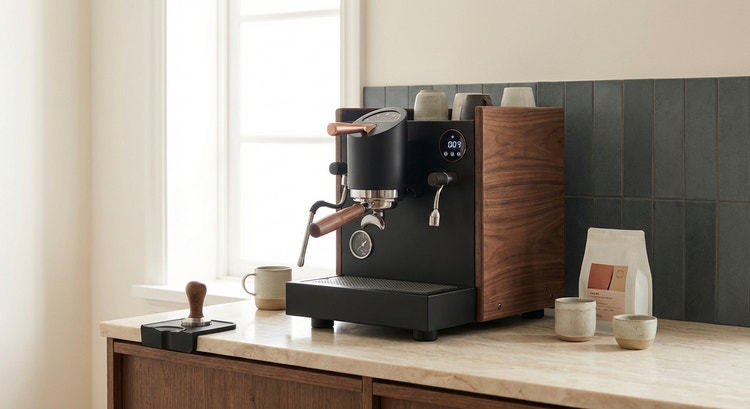
They chose the Arco Studio specifically because it handles both straight espresso and milk drinks well. The single boiler with heat exchanger means the machine can brew espresso and steam milk without waiting for a temperature transition — Ana pulls her shot, David steams his milk, and neither has to wait for the other. The E61 group head's thermal stability is important for Ana's light roasts, which are sensitive to temperature variation. A few degrees too cool and the shot tastes sour; a few degrees too hot and the delicate floral notes collapse into generic bitterness. The Studio's PID controller lets her set brew temperature precisely, and she runs it two degrees higher than the default for her preferred Ethiopian. David uses the same temperature setting and adjusts for his blend through grind and dose rather than temperature — his medium roast is more forgiving. The steam wand matters more to David than to Ana, who never touches it. The Studio's wand produces enough steam power for a flat white's worth of micro-foam in about fifteen seconds. David has practiced his milk texturing to the point where he can produce a consistently glossy, paint-like micro-foam that integrates seamlessly with the espresso. Ana admits, reluctantly, that his flat whites look beautiful.
What Sharing a Machine Teaches You
Living with someone who drinks coffee differently forces you to question your assumptions. Ana assumed that milk drinks were a way of hiding bad coffee — a bias inherited from Porto's espresso culture, where adding milk is seen as diluting the experience. After tasting David's flat whites made with a quality medium blend and properly textured milk, she revised that view. The milk does not hide the coffee; it transforms it, creating a drink with its own valid complexity. She still does not add milk to her own coffee, but she no longer considers it a lesser choice. David assumed that light-roast single origins were pretentious and unpleasant — a bias formed by a few bad experiences with sour, underdeveloped roasts at trendy London cafes. After tasting Ana's carefully dialed-in Ethiopian — sweet, floral, with a berry-like acidity that reminded him of a juice more than a coffee — he understood the appeal. He still prefers his blend, but he now tastes Ana's espresso when she opens a new bag, and he has started noticing flavor differences between origins in a way he never did before. The shared machine made them more knowledgeable and more tolerant coffee drinkers. It also, Ana notes, taught them to communicate about small domestic logistics with a clarity that has improved other areas of their relationship. If you can negotiate a grinder protocol, she says, you can negotiate anything.
Key Takeaways
- A grinder protocol with marked settings and a purge routine resolved the conflict of two people using different beans and grind sizes.
- The Arco Studio's heat exchanger serves both straight espresso and milk drinks without temperature transition delays.
- Living with a partner who drinks differently challenges assumptions and broadens your appreciation of coffee's range.
- The best shared setup is one that accommodates both people's preferences without requiring either to compromise on quality.
Related Products
Arco Studio