Elena Marchetti, Head of Product · 9 min read
Giovanni Basso taught mathematics for thirty-eight years at a liceo in Turin. When he retired at sixty-three, he expected to spend his time reading, gardening, and visiting his grandchildren. Instead, he discovered competitive barista challenges, entered his first amateur tournament at sixty-five, and has not stopped since. His machine is an Arco Studio Pro. His grinder is an Arco Zero. His competitors are mostly thirty years younger.
From the Faculty Lounge to the Home Bar
For nearly four decades, Giovanni's relationship with coffee was the same as most Italians: a quick espresso at the bar near school in the morning, another after lunch in the faculty lounge, brewed on a battered commercial machine that nobody maintained and everyone complained about. He drank it out of habit, not passion. Coffee was punctuation — a comma between classes, a full stop at the end of the day. Retirement changed the rhythm. Without the structure of the school day, Giovanni found himself with unoccupied mornings and a restlessness that gardening did not fully address. His daughter, who works in specialty coffee importing in Milan, gave him an Arco Primo for his sixty-third birthday. She included a bag of single-origin Ethiopian beans and a brief tutorial on dose and yield. Giovanni pulled his first proper home espresso that afternoon, tasted it, and experienced what he describes as genuine surprise. The flavors were nothing like the dark, bitter, generic espresso he had drunk his entire adult life. There was fruit — actual fruit — in the cup. Blueberry and jasmine, according to the tasting notes on the bag. He tasted them. He called his daughter to confirm he was not imagining things. She laughed and told him to wait until he tried a Kenyan. Within a month, he had ordered three more bags from different roasters and started keeping a notebook.
Upgrading and Going Deeper
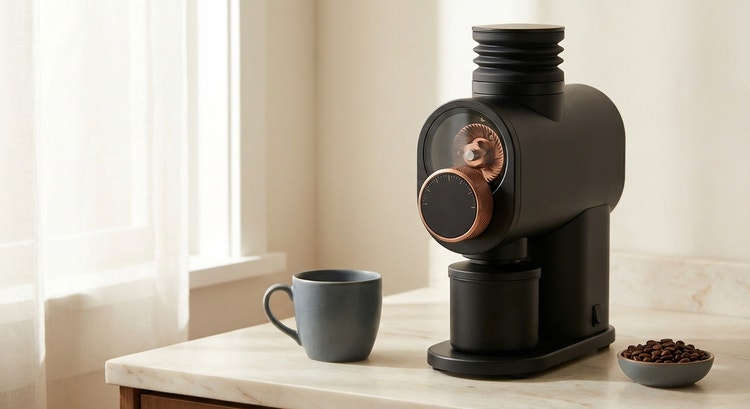
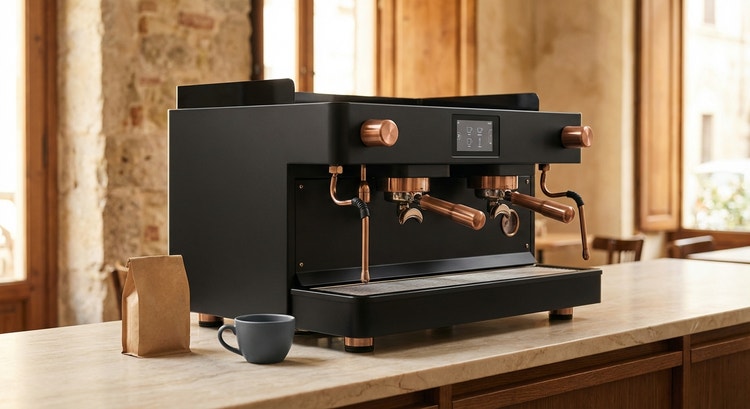
The Primo served Giovanni well for a year, but his growing ambition outpaced its capabilities. He wanted temperature control, pressure profiling, and the ability to experiment with longer pre-infusion times on light roasts. He researched for two months — his mathematical mind demanded thorough comparison — and chose the Arco Studio Pro for its combination of E61 group head, PID-controlled dual boiler, and real-time shot data on the display. The Arco Zero grinder followed shortly after, selected for its user-adjustable burr alignment, which Giovanni fine-tunes with the precision of someone who spent a career measuring and calibrating. His home setup now occupies a dedicated table in his study, away from the kitchen. He treats it like a workbench — clean, organized, with a scale, a distribution tool, a set of VST baskets, and a ring-bound logbook where he records every shot. The logbook is over two hundred pages deep and reads like a lab notebook: hypothesis, method, observation, conclusion. He describes his approach as scientific but acknowledges that his daughter calls it obsessive. The distinction, he says with a smile, is that a scientist publishes results. He just drinks them. His palate has developed rapidly — he attributes this to the same disciplined attention he brought to teaching differential equations for three decades.
The First Competition
Giovanni's entry into competition was accidental. A specialty coffee shop in Turin hosted an amateur latte art throwdown on a Saturday afternoon. His daughter mentioned it during a phone call, half-joking that he should enter. He did. He arrived at the shop expecting to be the oldest person in the room by two decades, and he was correct. The other competitors were baristas in their twenties and thirties, many of them professionals. Giovanni had never poured latte art — he drinks espresso without milk. But the throwdown had an espresso evaluation round alongside the latte art, and he entered that category. He presented a double shot pulled at the competition station — an unfamiliar commercial machine — and the judges scored it on visual appearance, crema quality, flavor balance, body, and aftertaste. He placed third out of twelve, beaten by two professional baristas and ahead of everyone else. The judge's comment on his score sheet read: 'Excellent balance, clean finish, clearly someone who tastes their shots.' Giovanni framed the score sheet. It hangs above his espresso station at home, beside a photograph of his students from his final year of teaching. Since that first throwdown, he has entered six more amateur competitions across northern Italy. He has placed in the top three in four of them.
What Competition Taught Him
Giovanni is not competitive in the aggressive sense. He does not train to win. He enters competitions because they force him to perform under conditions he cannot control — an unfamiliar machine, an unfamiliar grinder, beans he has never tasted, and a time limit. This is the opposite of his meticulous home practice, where every variable is familiar and logged. Competition strips away the comfort of routine and tests whether the underlying skill is real. The most valuable lesson, he says, was learning to adapt quickly. At his third competition, the grinder at the station was badly calibrated and producing an uneven particle distribution. Most competitors struggled with channeling and inconsistent shots. Giovanni spent his first two minutes recalibrating the zero point — a skill he had practiced at home on his Arco Zero — and pulled clean shots for the rest of the round. The judges noticed. Beyond technique, competition introduced Giovanni to a community he had not expected: young, passionate, generous people who share knowledge freely and treat a retired mathematics teacher as a peer rather than a curiosity. He mentors two young baristas now, helping them with the analytical side of espresso — extraction math, ratio optimization, the geometry of puck preparation. He says it feels like teaching again, but this time the students chose to be there, and the subject is one he loves as much as they do.
Key Takeaways
- A lifetime of disciplined analytical thinking transfers directly to espresso — Giovanni's mathematical mindset accelerated his palate development.
- Upgrading from the Primo to the Studio Pro gave Giovanni the temperature control and shot data he needed for serious experimentation.
- Competition forces adaptation under unfamiliar conditions, testing whether skill is real or just routine.
- The specialty coffee community welcomed a sixty-five-year-old retired teacher as a peer, proving that passion has no age requirement.
Related Products
Arco Studio Pro