Luca Bianchi, Head of Training · 8 min read
On the last Saturday of October, forty-six Arco owners and enthusiasts gathered in the courtyard of our Reggio Emilia workshop for the first Arco Community Brew Day. The idea was simple: set up twelve espresso stations, supply excellent beans, and let people pull shots, share techniques, and meet the faces behind the machines they use every morning. What actually happened was better than anything we planned.
How It Started
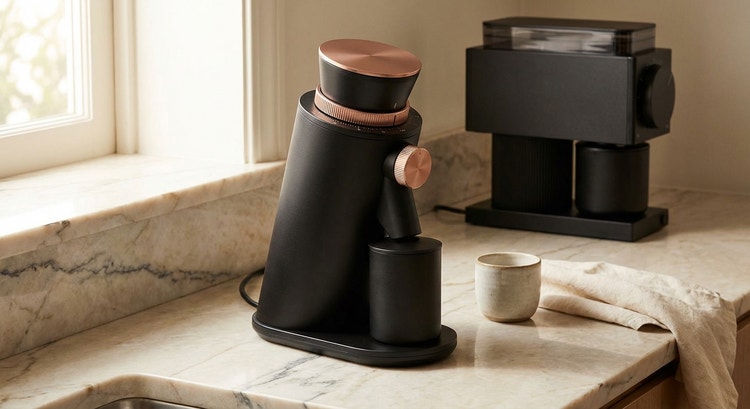
The Brew Day grew out of a conversation Luca had with three customers at a trade show in Milan last spring. They had all traveled to the show specifically to visit the Arco stand, and they asked whether Arco ever hosted events for home users. At the time the answer was no — the workshop in Reggio Emilia runs training sessions for dealers and service technicians, but nothing for the community of people who actually live with Arco machines every day. That felt like an obvious gap. Over the summer the team planned a pilot event: one Saturday, open to the first fifty registrants, free of charge. Registration filled in four days. The format was deliberately informal — no keynote presentations, no rigid schedule, no name badges. Twelve stations were set up in the courtyard, each equipped with an Arco machine and an Arco grinder. Six stations featured the Studio and Preciso, four had the Doppio and Macinino, and two ran the Primo for attendees curious about the entry-level range. Three local roasters — Torrefazione del Corso from Parma, Caffè Rubino from Bologna, and Micro Lotto from Modena — each brought four single-origin coffees. Every station had fresh beans and a shared grinder, and attendees were free to roam, pull shots, and experiment.
The Dial-In Challenge
The only structured activity of the day was a friendly dial-in challenge that ran from ten in the morning until noon. Participants formed teams of three, received a bag of coffee they had never tasted before — a natural-process Colombian from Caffè Rubino — and had twenty minutes and one hundred grams of beans to produce the best shot they could. Judging was done blind by the three roasters, who tasted each team's final shot without knowing who made it. The criteria were balance, sweetness, clarity, and absence of defects. No scales were allowed at the judging table — just palate. Fourteen teams entered. The winning team included a mechanical engineer from Turin, a pastry chef from Cremona, and a university student from Reggio Emilia who had owned her Arco Nano for only three months. Their winning shot was a fourteen-gram dose pulled at a two-to-one ratio in twenty-eight seconds on a Studio, which the roaster who supplied the beans described as the best extraction he had seen of that particular lot. The engineer credited their success to the pastry chef's palate — she identified a subtle dryness in their second attempt that led them to coarsen the grind by a fraction and extend the ratio, which sweetened the final shot. The student said she had never dialed in a coffee that fast and was going home to try the same systematic approach with her Nano.
Conversations We Did Not Expect
What surprised the Arco team most was the depth and generosity of the conversations that happened between attendees. People who had never met were sharing techniques, troubleshooting each other's problems, and debating extraction theory with the kind of enthusiasm usually reserved for football or politics. At one station, a retired teacher from Parma — Giuliana, a regular in our community features — spent an hour walking three beginners through her distribution technique, demonstrating the WDT method she has refined over two thousand logged shots. She was more patient and effective than most professional trainers, and two of the three beginners said it was the most useful coffee instruction they had ever received. At another station, a couple from Verona who had been struggling with channeling on their Doppio discovered that the issue was their tamping pressure, not their grind size, after a fellow attendee watched them prepare a puck and spotted an uneven tamp. The fix took ten seconds. They had been fighting the problem for three months. A latte art session that was supposed to be a casual demonstration turned into a two-hour workshop when fifteen people lined up to practice. Luca ended up steaming over four liters of milk, coaching each person through the pour. Three attendees produced recognizable rosettas by the end, and the group erupted in applause each time one landed.
Feedback and What We Learned
At the end of the day, we asked attendees to write one thing they enjoyed and one thing they would change on index cards and drop them in a box. Forty-one of forty-six attendees submitted cards. The most common positive response was meeting other Arco owners. Many people said they had never spoken to another person who cared about home espresso as much as they did, and that the sense of community was the most valuable part of the day. The second most common response was hands-on access to machines they had not tried — upgraders who tested the Studio or Doppio for the first time, and existing owners who compared their machine's performance against a freshly calibrated unit from the workshop. The most common suggestion for improvement was more time. Several people said the day felt too short and that they wanted a two-day format, or at least a longer afternoon session. Others asked for more structured learning — short fifteen-minute clinics on specific topics like milk texturing, grinder calibration, or water chemistry. A few requested a repeat event in a different Italian city so that people outside Emilia-Romagna would not have to travel as far. We are taking all of this seriously. The pilot proved there is genuine demand for in-person community events, and the quality of the interactions showed that Arco owners have as much to teach each other as we have to teach them.
What Comes Next
The first Community Brew Day was an experiment. We did not know if people would show up, how the format would work, or whether the atmosphere would be welcoming enough for beginners to feel comfortable alongside experienced home baristas. On all three counts, the event exceeded expectations. Based on the feedback and our own observations, we are planning three Brew Days for 2026. The first will be in Reggio Emilia again in late March, expanded to sixty attendees with the addition of focused clinics — twenty-minute sessions on specific skills, run by Arco trainers and guest roasters. The second will be in Milan in June, hosted at a partner roastery with a larger space that can accommodate up to eighty people. The third is tentatively planned for autumn in either Rome or Naples, extending the event to southern Italy for the first time. Registration for the March event will open in January through the Arco community newsletter. If you are not subscribed, you can sign up on the website footer or email us directly. We will also be inviting a handful of attendees from the October event back as volunteer station hosts — experienced community members who can help newcomers the way Giuliana helped beginners at her station. The best thing about the Brew Day was watching Arco owners teach each other. Our job going forward is to create the space and get out of the way.
Key Takeaways
- Forty-six Arco owners gathered in Reggio Emilia for the first Community Brew Day, pulling shots across twelve stations with beans from three regional roasters.
- A blind dial-in challenge proved that collaboration and palate trump experience — the winning team included an owner of just three months.
- The most valued aspect of the event was meeting other home espresso enthusiasts and learning from each other.
- Three Community Brew Days are planned for 2026 in Reggio Emilia, Milan, and southern Italy.
Related Products
Arco Studio
Arco Doppio
Arco Primo
Arco Preciso