Marco Bellini, Content Editor · 10 min read
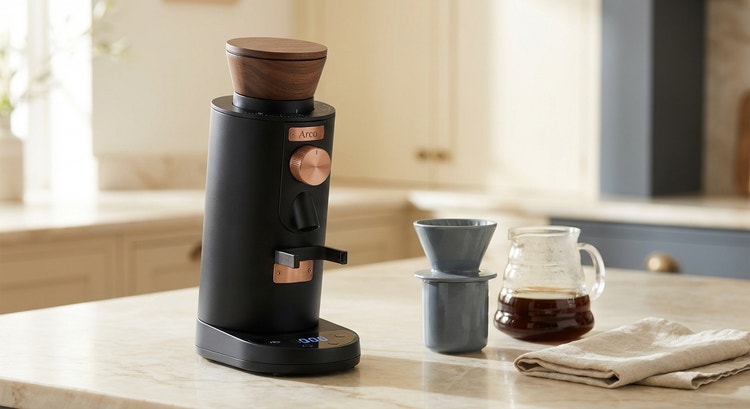
Davide Ferrara spent six years feeding capsules into a pod machine every morning without thinking much about what ended up in his cup. A single shot of espresso at a specialty cafe in Bologna changed that. Eighteen months later, he owns an Arco Primo, an Arco Macinino, and a shelf of single-origin beans. This is the story of how he got from there to here, and what he learned along the way.
The Capsule Years
Davide is a software engineer who works from home in a small apartment in Modena. For the first six years of his coffee life, his setup was a capsule machine on the kitchen counter and a subscription box that delivered a sleeve of pods every two weeks. He liked the convenience. Press a button, wait fifteen seconds, carry the cup to his desk. No grinding, no mess, no decisions. The coffee was fine — not great, not terrible, just consistently fine. He never thought about extraction yield or water temperature or grind size because the system did not require him to think about those things. That was the product's promise and it delivered. What finally shifted his perspective was not a bad experience with capsules but an unexpectedly good experience without them. During a weekend trip to Bologna, he stopped at a small specialty cafe near Piazza Maggiore and ordered an espresso out of habit. The barista pulled a shot of a washed Ethiopian Yirgacheffe on a lever machine, and Davide says the moment it touched his tongue he realized he had never actually tasted espresso before — only a muted, homogenized approximation of it. The shot was bright, floral, almost tea-like, and nothing in his capsule experience had prepared him for the idea that coffee could taste like that. He went back the next morning and ordered the same thing.
The Research Spiral
Like many people in technical fields, Davide responded to his new curiosity by researching exhaustively. He spent two months reading forums, watching comparison videos, and building spreadsheets of machines, grinders, and accessories before buying anything. He describes this phase with a mix of fondness and embarrassment — the spreadsheet eventually had forty-seven rows and twelve columns including a weighted scoring formula. What he kept circling back to was the tension between convenience and quality. He did not want to spend thirty minutes making coffee every morning. He wanted something closer to five. But he also wanted the clarity and complexity he had tasted in Bologna, and every source he trusted said that required freshly ground beans, a proper machine, and some degree of skill. The Arco Primo caught his attention because it sat in the middle of that tension. It was a serious single-boiler espresso machine with PID temperature control, but it was also compact, relatively simple to operate, and priced for someone making their first real investment in espresso rather than their third. The Arco Macinino paired naturally with it — a grinder with enough precision for espresso but without the complexity and cost of a commercial-grade unit. He ordered both on the same day and cleared the capsule machine off the counter that evening.
The First Month of Real Espresso
Davide is honest about the fact that his first two weeks were rough. The capsule machine had required no skill whatsoever, and the Primo required all of it. His early shots ranged from thin, sour, fast-running disasters to bitter, choking sludge. He burned through nearly a kilogram of coffee in the first week just trying to get a drinkable shot. The turning point came when he stopped trying to hit numbers and started tasting. He had been obsessing over dose weight, yield, and shot time because the forums told him to aim for specific ratios, but he had no framework for connecting those numbers to flavor. Once he began tasting each shot immediately and writing a one-word description — sour, bitter, balanced, bright, flat — he could correlate his adjustments with outcomes. Within three days of taste-first dialing, he pulled a shot that reminded him of Bologna. It was not as good, he admits, but it was recognizably the same category of experience — a clean, sweet espresso with identifiable origin character rather than generic roasty bitterness. That shot was the moment the investment justified itself. From there, improvement came quickly. By the end of the first month, he was consistently pulling shots he enjoyed and had reduced his morning routine to about seven minutes from beans to cup. Not quite the fifteen seconds of the capsule machine, but a trade he was happy to make.
What He Would Tell His Capsule-Machine Self
We asked Davide what he would say to someone standing where he stood eighteen months ago — satisfied with capsules but curious about something more. His answer was practical rather than evangelical. First, he said, do not let anyone make you feel bad about capsules. They are a legitimate product that solves a real problem. The reason to move beyond them is not that they are wrong but that there is a whole dimension of coffee flavor they cannot access, and if you have tasted that dimension and want more of it, the only path is through fresh grinding and proper extraction. Second, budget for the grinder from day one. He almost bought the Primo without a grinder, planning to use pre-ground coffee temporarily. Every source he read said that would cripple the machine's potential, and having now experienced the difference, he confirms it. The Macinino was half the total investment and delivered more than half the improvement. Third, buy one kilogram more coffee than you think you need for the first month. You will waste beans learning, and that is the cost of tuition. Fighting the waste by trying to save every shot just slows the learning process. Fourth, keep your capsule machine for the first two weeks. There will be mornings when your shot fails and you are late for a meeting and you need coffee immediately. Having a fallback prevents frustration from souring the learning experience. Davide finally gave away his capsule machine after six weeks. He says he does not miss it, but he is grateful it was there during the transition.
Where He Is Now
Eighteen months into his espresso journey, Davide has settled into a routine that takes about seven minutes each morning and produces two shots — one straight espresso and one that goes into a small glass of steamed oat milk. He buys beans from three different roasters on a rotating subscription and has learned that he gravitates toward washed Central American and East African coffees with bright acidity and fruit-forward profiles. He keeps a simple log in a notes app — date, bean, grind setting, dose, yield, time, and a one-line tasting note — that he reviews when dialing in a new bag. His Primo has been running daily for a year and a half without a single issue beyond the routine maintenance the manual prescribes. He descales quarterly, replaces the group gasket annually, and backflushes with detergent every two weeks. The machine, he says, rewards consistent care with consistent performance. The most surprising thing about the transition, he told us, was not the improvement in coffee quality — he expected that. It was the improvement in the morning itself. The capsule routine was fast but forgettable. The espresso routine is slower but present. He notices the smell of the beans when the hopper opens. He feels the resistance of the tamp. He watches the first drops fall from the bottomless portafilter. Seven minutes of paying attention to something physical before a day spent staring at code. He did not expect that to matter, but it does.
Key Takeaways
- Capsule machines are a fine starting point, but they cannot deliver the clarity and complexity of freshly ground, properly extracted espresso.
- Budget for machine and grinder together — the grinder contributes at least half of the improvement in cup quality.
- Taste every shot during the learning phase rather than chasing numbers; flavor feedback accelerates dial-in faster than timers and scales alone.
- Keep your old machine as a fallback during the first weeks to prevent frustration from undermining the learning process.
Related Products
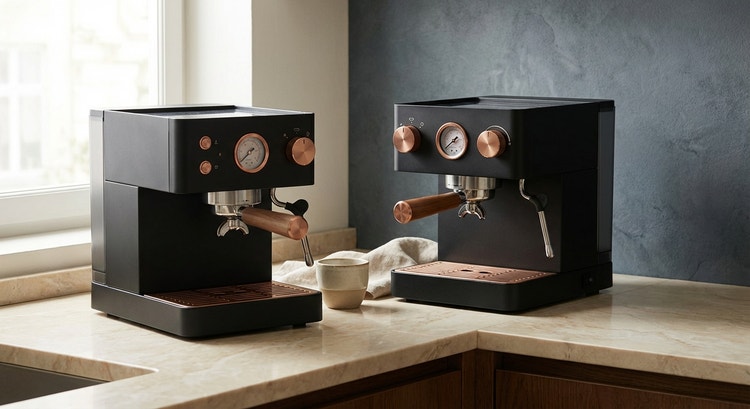
Arco Primo