Luca Bianchi, Head of Training · 11 min read
Elena Marchetti has led product development at Arco since the company's founding. She designed the Studio's brass boiler system, championed the E61 group head, and pushed for user-serviceable design at every level of the range. We sat down with her to talk about design philosophy, trade-offs, and what she drinks at home.
On Starting Arco and the First Machine
The interviewer opens by asking Elena what prompted her to start Arco. She explains that she spent a decade working for larger Italian espresso machine manufacturers, designing components and subsystems but never owning the full product vision. The frustration was always the same: engineering decisions were overruled by cost-reduction targets or marketing timelines. Good designs were compromised before they reached production. She wanted to build machines where the engineering came first and the price followed, rather than the other way around. The first Arco machine was the Studio — not the Primo, which came later. Elena deliberately started at the top of the range because she wanted to establish a quality benchmark before designing more accessible models. The Studio took eighteen months from first sketch to first shipment, twice what she had budgeted. The boiler alone went through four revisions. The first prototype used a stainless steel boiler because that was what she knew from her previous work. It worked, but the thermal recovery between shots was not where she wanted it. She switched to brass on the second prototype and immediately saw the improvement in temperature stability data. The third prototype refined the thermosyphon channel geometry, and the fourth — the production version — tightened tolerances on the CNC machining to reduce flow turbulence inside the channels. Each revision was an incremental gain, but compounded together they produced a boiler system she was genuinely proud of.
On Design Trade-offs and Saying No
Asked about the hardest trade-off in the current lineup, Elena does not hesitate: the Primo's thermoblock versus a boiler. Early prototypes of the Primo had a small brass boiler, consistent with the Studio's DNA. But a boiler at that size and price point introduced compromises — either the boiler was too small to maintain temperature through a double shot, or the machine was too expensive for its target buyer. The thermoblock was a better engineering solution for the constraints: fast heat-up, adequate temperature stability for its intended use, and a price that let Arco include a quality portafilter and accessories rather than cutting corners on what the user actually touches. She is equally candid about features she has said no to. Arco has no plans for a built-in grinder, despite frequent customer requests. Integrated grinders compromise on grind quality because they are constrained by the machine's form factor, and they tie the grinder's lifespan to the machine's. If the grinder wears out or if you want to upgrade, you cannot replace it independently. Elena believes the grinder and the machine should be separate tools, each optimized for its own job. She also resisted adding a touchscreen to the Studio Pro, opting instead for physical buttons with a small OLED display. Touchscreens look modern but they fail in humid, coffee-splattered environments. Physical controls last longer and provide tactile feedback that you can operate without looking — a genuine advantage at six in the morning.
On User-Serviceable Design
Elena becomes visibly animated when the conversation turns to serviceability. She describes it as the most important design principle at Arco — more important than aesthetics, more important than features. Every Arco machine is designed so that the owner can perform routine maintenance — gasket replacement, descaling, shower screen cleaning, pump replacement — with basic hand tools and no specialized knowledge. The service manual for every model is published openly on the Arco website. This is unusual in the home espresso industry, where many manufacturers treat the interior of their machines as off-limits to the consumer, voiding warranties if the case is opened. Elena finds this approach disrespectful. People who care enough about espresso to buy a quality machine are curious, capable people. They want to understand how their equipment works, and they should be empowered to maintain it. Designing for serviceability also constrains the engineering in productive ways. If a pump must be replaceable by a non-technician, it cannot be buried under layers of plumbing. If a boiler must be descalable without disassembly, it needs accessible fill and drain paths. These constraints push the team toward cleaner, more modular layouts that are not only easier to service but also easier to assemble in the workshop — a win on both ends of the lifecycle.
On What She Drinks at Home
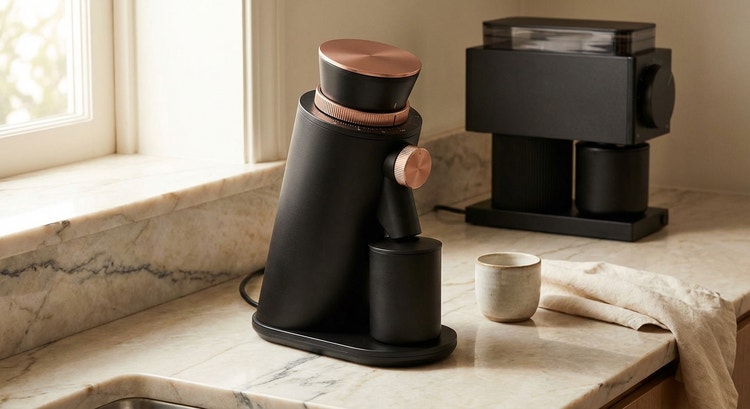
The final question is predictable but Elena's answer is not. At home in Bologna, she uses an Arco Primo — not the Studio or Studio Pro she designed. The Primo sits on her kitchen counter beside an Arco Preciso grinder. She pulls two double shots every morning, one for herself and one for her partner, and drinks them straight as espresso. No milk, no sugar. She switches beans every two weeks, alternating between a local Bologna roaster and a subscription from a Nordic roaster in Copenhagen. She prefers washed Ethiopians for their clarity and Kenyan lots for their intense fruit acidity. On weekends, she sometimes uses a manual lever machine — a vintage Pavoni — because she enjoys the ritual and the physical connection to the brewing process. She chose the Primo for daily use because it heats up in ninety seconds and produces consistent shots without fuss. The Studio is a better machine by every objective measure, she admits, but it takes fifteen minutes to warm up fully and rewards a more attentive workflow. At six-thirty in the morning, she wants espresso, not a project. This, she says, is exactly the insight that led to the Primo's design in the first place — that the best machine is the one that fits how you actually live, not the one with the most impressive specification sheet.
Key Takeaways
- Arco started with the Studio to establish a quality benchmark before designing more accessible machines like the Primo.
- The Primo's thermoblock was chosen over a small boiler because it delivered better performance at the target price point.
- User-serviceable design is Arco's highest priority — every model includes open service documentation and modular layouts.
- Elena uses the Arco Primo at home because the best machine is the one that fits your actual morning routine.
Related Products
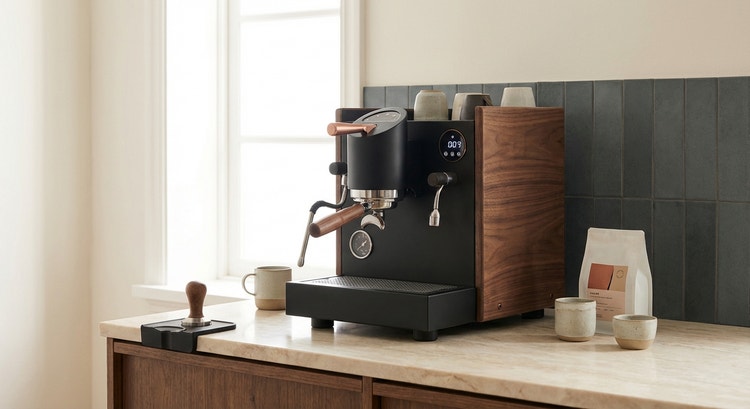
Arco Studio
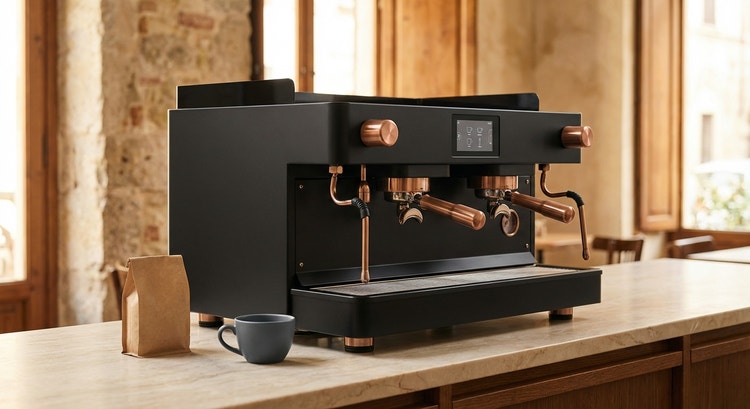
Arco Studio Pro
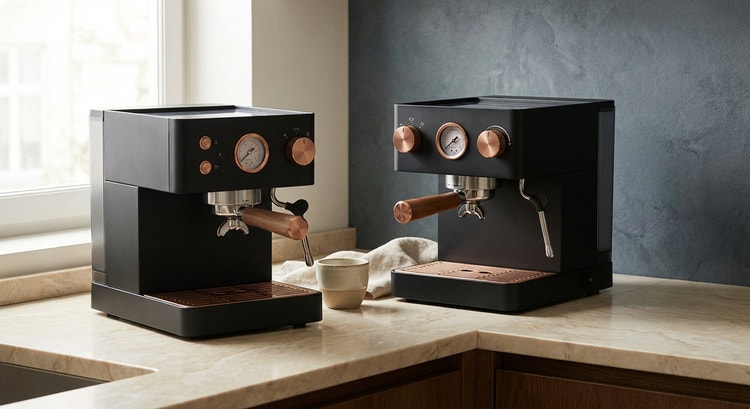
Arco Primo